Advanced Foot and Ankle Center of San Diego

Tag: Cartiva

  • Cartiva Implant Success For Hallux Rigidus

    Many times prospective patients wonder ” I read about this procedure, but does it really work? Cartiva for Hallux Rigidus and Hallux Limitus not only works great but the long-term outcomes on it have been very very impressive. I continue to have patients that come in having done this procedure for Hallux rigidus and hallux limitus that are a few years out and they are singing its praises. Below is an email from one of my happy patients that gave me permission to post what he spontaneously wrote to me. He describes the long-term outcomes and benefits he has received with Cartiva for Hallux Rigidus.

    Hello Dr, Phil,

    Was working around the yard yesterday digging holes..repairing my sprinkler system. I realized my big toe on my right foot was not bothered at all with the activity. Got me thinking that it will be three years in August since the surgery. I remember that prior to the surgery, just the weight of a blanket in bed was painful! Now I never think of it.

    Too often we take successful surgery for granted and neglect to thank the person responsible.

    Thanks so much for recommending and performing the surgery that gave me my active life back.

    So far, so good, on the left foot but won’t hesitate if it starts acting up to reach out again.

    Again, thanks so much and keep up the good work.

    Regards,

    Rick

  • Osteochondral Defect of the Talus

    Ankle pain can really hold you back. If one takes three to five thousand steps a day that’s 3-5000 times that your ankle can hurt you daily. That is a painful way to live. There are many reasons for ankle pain. One that we specialize in here at the Advanced Foot And Ankle Center Of San Diego is Osteochondral Defect of the Talus.

    https://youtu.be/qRl2EmMhRmQ

    As you can see from the video above this is a treatable condition. However one must realize that not many doctors are trained in and not many doctors have much experience in doing these procedures.

    The first challenge is getting the diagnosis. Once one is evaluated in the office an x-ray is helpful in pointing us in the right direction. Many times the x-ray is insufficient, the next step is an MRI. The MRI is more specific for cartilage disorders. As can be seen below the dome of the talus has lost its natural contour and there is a defect of the cartilage of the ankle joint.

    OCD Talus MRI
    Osteochondral Defect of the Talus MRI

    Once a diagnosis is made, then based on the size and position of the defect as well as pain levels associated with the defect then one can make an informed decision with their surgeon as to the proper treatment. This article is only about surgery because the defect does not repair itself and does not self-heal. Either you have pain or you don’t.

    The technique I would like to share with you is performing a medial malleolar osteotomy to access the talus and properly repair the defect. In my opinion, this is the only way to fully visualize the talus and repair the cartilage. Using arthroscopy or any small camera will not reach far back into the joint to visualize is well enough. And if you can not see what you are repairing then you can not repair it.

    We use special cryopreserved cartilage that is called cartiform. This implant has been highly successful in my hands in repairing cartilage injuries of the foot and ankle.

    Medial malleolar osteotomy for Osteochondral defect of the talus

    Above you can see in the picture the injured cartilage that is lifted off the bone.

    cartiform cartilage graft
    Repaired Osteochondral defect of the talus with cartilage graft

    Above you will see the cartiform placed over the area of the talus that had the cartilage injury.

    Ankle injuries can be very serious and should not be ignored. Come in today for your evaluation.

  • Cartilage Replacement For ankle Arthritis

    Cartilage Replacement For ankle Arthritis

    If you have foot or ankle arthritis you may be frustrated with the available options. Non surgical options such as physical therapy or injections may not have worked for you. You may have researched stem cell treatment, however there is no real good scientific data that shows it grows any cartilage, let alone reduce pain. I have patients that have spent over $5,000 in stem cell injections and have gotten no relief. Typically from a surgical standpoint the options available have been Ankle joint fusion or ankle replacement. Ankle replacement has advantages of maintaining motion, however there is much argument in the literature as to the longevity of the hardware used in ankle replacements. As well when there are complications such as loosening of the implant of infection then you really have problems. Many times with ankle replacements one will get back their motion but it is painful motion, and the surgeon needs to remove large chunks of bone to get in the implant. On the other hand ankle fusions have been around as a solution for over 50 years. ( I have even published articles on this procedure https://pdfs.semanticscholar.org/bebf/d64602522a0ad98eee28aa3c972696b08857.pdf ) The procedure works by eliminating the motion from the ankle. No motion should equal no pain. However loss of motion can have effects on other joints and will affect the way you walk. With both of those procedures you end up burning bridges and can not turn back once done.

    Cartilage Replacement For ankle Arthritis

    This brings us to an innovative procedure that I have been doing the past few years and that is cartilage replacement of the ankle for ankle arthritis. There is now available cryo-preserved  cartilage on the market that promotes stem cell like migration. http://www.osiris.com/cartiform/  

    This biological implant allows for one to maintain motion and does not remove large chunks of bone. Lastly one burns no bridges when putting it in. If the procedure does not give you the results that you were hoping for you can always still have the replacement or fusion . This procedure works great on ankle arthritis and Hallux rigidus ( arthritis of the big toe)

    watch my video below describing a case study.

    https://www.arthrex.com/resources/presentation/3w3UfAMQN02wlQFkBOQsMA/1st-mpj-resurfacing-using-cartiform-viable-osteochondral-allograft

    cartilage replacement arthrex cartiform
    cartilage replacement arthrex cartiform big toe

  • Cartiva For Hallux Rigidus

    Cartiva For Hallux Rigidus

    Cartiva for Hallux Rigidus

    Patients suffering with a stiff and painful big toe joint ( Hallux Limitus or Hallux Rigidus, Osteoarthritis of the big toe 1st MPJ)  now have a great option to get their life back. Cartiva is an implant that is changing how surgeons approach foot surgery. It is a joint sparing implant. That means unlike a fusion where one can not move the toe again cartiva allows for increased motion and no more pain. Cartiva is the only implant with level one studies showing increased motion , decreased pain and functional improvement. I have been using this implant in my practice and am amazed by the satisfaction of my patients. I have been doing Hallux limitus and hallux rigidus surgery for over 15 years. In my experience this implant when used for the proper indications is one of the best out on the market.

    Cartiva does not Burn Bridges

    The other implant solutions on the market have certain downsides. Most of them burn bridges. What i mean by that is if you fuse the toe then is does not move again- bridge burned. If you put in a metallic implant then you have to remove a lot of bone to get it in, if it fails and it needs to be removed your stuck with a short toe- bridge burned. Cheilectomies do not seem to accomplish much. I have hundreds of patients that come into my practice yearly that had a cheilectomy done and the pain came back within 9 months.

    Cartiva is the solution

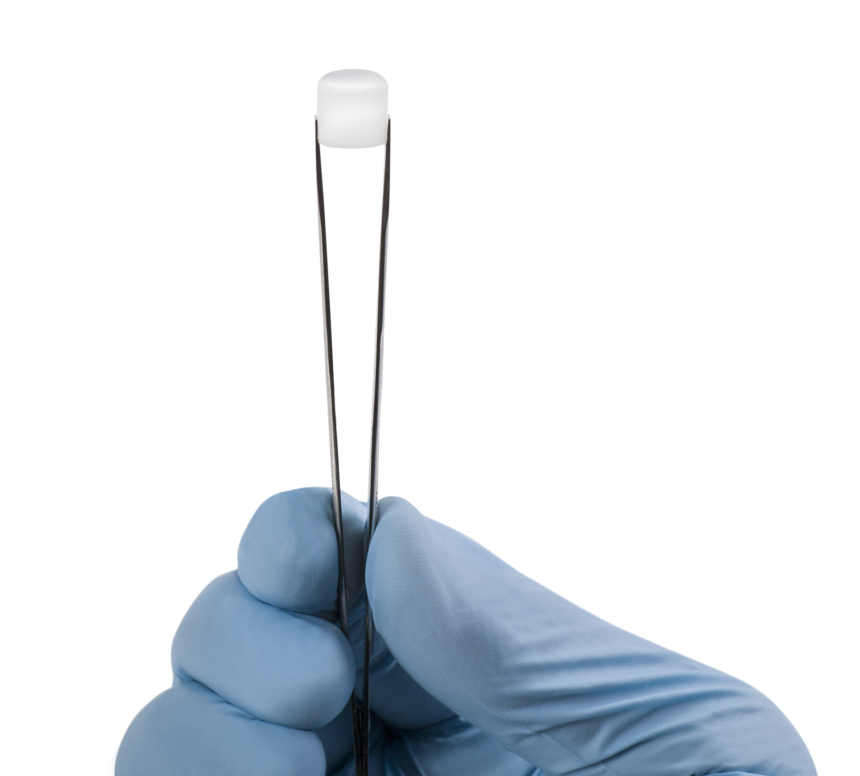
    Cartiva is made of a organic polymer that mimics cartilage. You get back the missing motion. You can immediately weight bear on the toe after the surgery. once the incision heals you can get back into your shoes. For my patients the recovery time for cartiva is much faster than any other big toe surgery. It is a great option for treating osteoarthritis of the big toe.

    An x ray with a physical exam of the toe is always necessary to properly diagnose and to see if Cartiva is right for you . Make an appointment today