Advanced Foot and Ankle Center of San Diego

Tag: Heel pain

  • The Cost of Custom Orthotics

    The Cost of Custom Orthotics

    The Cost of Painless Walking is $2

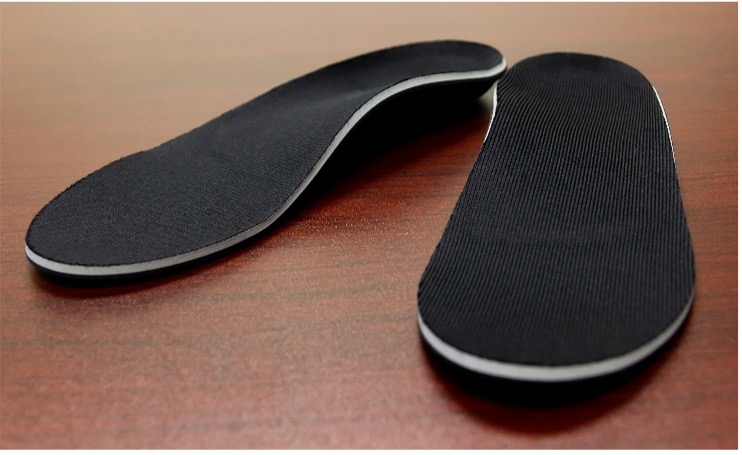
    A friend and I were discussing orthotics the other day and we were talking about the price of custom orthotics. Especially in today’s economy with every subsequent article talking about rising inflation rates, the negative performance of the stock market, and an ever-increasing risk of recession that may or may not be worse than 2008, the price of everything comes to the forefront. Typically, custom orthotics cost 100’s of dollars. I could wax on and on about why a custom orthotic is better than a store-bought $40-$100 orthotic. However I’d like to share what my friend said.

    He told me there is a saying that simply says to:

    “Invest good money in anything that separates you from the ground”

    Your chair, Your bed, Your shoes, Your tires, etc. These things are necessities in everyday life. A deficient or broken product usually leads to a significant disruption in daily living. The most common example is your mattress. The benefits of a good night’s sleep are well documented. It is standard advice to invest in a good mattress that will meet your sleep hygiene needs to get much-needed rest so that you can be at your peak performance the next day. Skimping and buying something subpar usually results in a disruption in sleep, a decrease in performance the next day, and the eventual purchase of another mattress quite a bit sooner than you would have otherwise.

    Applied to orthotics, he quoted the often cited “10k steps a day” statistic. It is a commonly accepted belief in the modern day that 10,000 steps a day is a relatively good measure of a healthier active lifestyle. While there is debate about to its accuracy, for simplicity’s sake, let’s assume it is true. If you take 10,000 steps a day, that means you use both feet at least 10,000 times a day. Thus, you take 3,650,000 steps in a year. If you need orthotics, that means you will be using them at least 3.6 million times a year. For $650 that comes out to about

    which can also roughly be expressed as $2 a day to walk painlessly. However, that assumes the custom orthotic only lasts for 1 year. The average custom orthotic usually will last at least 5-10 years depending on the amount of use. Even then, it will usually just need to be refurbished, not made from scratch (a significantly cheaper process). The math at that point becomes about $1 for 56,000 steps or about $1 for a little under a week’s worth of painless walking. Either way, the question is, is that worth it? To need a custom orthotic, there must be a foot and ankle issue that is causing a disruption large enough to go to a podiatrist’s office to seek help. What could you do if that pain wasn’t there anymore? How much is walking painlessly worth to you? It’s a personal decision, especially in today’s economy. But, again, I think it’s wise advice to keep in mind. Invest good money in anything that separates you from the ground.


    Written by Dr. Gavin Tsuchida

    Dr. Tsuchida recently moved to San Diego from New York and is enjoying the beach and hiking when he’s not providing thoughtful, personalized care for his patients.


  • Ankle Equinus

    Does your ankle not move all the way up. Are you or your child walking with out your heel hitting the ground.  Then you may have a condition called equinus

    The Ankle Joint is a key joint in your lower extremity that your body rolls over in the process of propelling you forward during the gait cycle. You May hear about over pronation  as a major cause of foot pain. Let me tell you over-pronation is over rated. Foot pain can stem from a variety of bio-mechanical malfunctions. Today we will talk about equinus.

    Many scientific studies have shown a higher connection of ankle equinus and limited ankle range of motion as the source for many foot and ankle diseases. For example Heel pain and plantar fasciitis as well as heel spurs are directly related to a tight Achilles tendon. Ankle Equinus and a tight Achilles tendon has been identified as the culprit on Bunions and Hammertoes. Many diabetic foot ulcers and foot wounds are directly because of a contracture (meaning tight) of the Achilles tendon. The reason is that the ankle joint requires a specific amount of motion in the upward direction or else there are increase forces on the rest of the foot.

    Achilles stretching exercises are vital in helping you recover. Daily stretching such as hanging your heels of the back of stairs can help increase the motion in the ankle thus decreasing the forces on the rest of the foot. Physical therapy plays an important role in Achilles tendon therapy. Also night splints can provide stretching for over 8 hours at a time while you sleep.

    If all else fails there is a minor surgery where I stick a camera in the back of the leg with a 2 millimeter incision and using a tiny blade the tendon can be lengthened is less than 5 minutes. This as quite an amazing procedure that has dramatic results in pain relief.

    One must be thoroughly evaluated with proper Achilles range of motion tests to see if your motion is limited.

    equinus ankle
    equinus ankle

    dscn7032

  • Heel pain therapy

    Heel pain therapy

    Heel pain is one of the most common problems when patients experience foot pain. It has been reported that approximately 40% of people in the U.S. suffer from heel pain at any given time. The major cause of bottom-of-the-foot heel pain is plantar fasciitis.

    The plantar fascia is designed to support the arch and absorb high stresses the foot takes on as we go through our day-to-day activities. Sometimes these stresses become too much for the tissue to handle. This can cause micro-tears to the tissue which result in pain and inflammation to the heel (where the plantar fascia attaches). You may even have a spur at the insertion site (this however is typically just a symptom of the problem, not the cause of the pain). Fortunately, plantar fasciitis can be treated with a wide range of options, most of which are nonsurgical. These include rest, ice, steroid injections, biological injections, stretching, orthotics, night splints, and physical therapy. If these options fail, surgical release of the plantar fascia is a potential solution to the problem.

    There have been some very promising advances in care for heel pain. Such as platelet rich plasma PRP injections and amniotic fluid injections. The amniotic membrane injections are very exciting because they allow the body to repair itself using the young cells found in the placenta. Those cells are precursor cells and high in anti inflammatory properties. Patients have been very satisfied with these treatments as they don’t require a incision and don’t require a trip to the operating room.

    Physical therapy and stretching and custom molded orthotics will always play an important role in the treatment of heel pain.Many studies have linked a tight achilles as the source of the heel pain. So be sure to do a lot of stretching.

    If you are suffering from heel pain, please give my office a call to schedule an appointment. You do not need to suffer any more!

    ankle spur heel spurHeelSpur