Tag: pes plano valgus

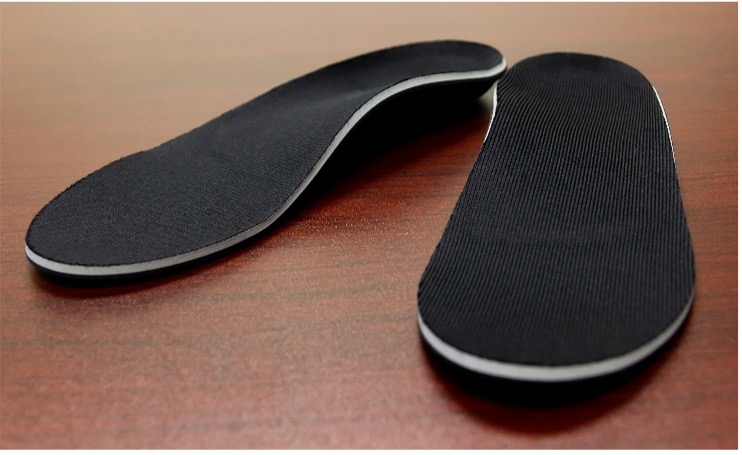
  • The Cost of Custom Orthotics

    The Cost of Custom Orthotics

    The Cost of Painless Walking is $2

    A friend and I were discussing orthotics the other day and we were talking about the price of custom orthotics. Especially in today’s economy with every subsequent article talking about rising inflation rates, the negative performance of the stock market, and an ever-increasing risk of recession that may or may not be worse than 2008, the price of everything comes to the forefront. Typically, custom orthotics cost 100’s of dollars. I could wax on and on about why a custom orthotic is better than a store-bought $40-$100 orthotic. However I’d like to share what my friend said.

    He told me there is a saying that simply says to:

    “Invest good money in anything that separates you from the ground”

    Your chair, Your bed, Your shoes, Your tires, etc. These things are necessities in everyday life. A deficient or broken product usually leads to a significant disruption in daily living. The most common example is your mattress. The benefits of a good night’s sleep are well documented. It is standard advice to invest in a good mattress that will meet your sleep hygiene needs to get much-needed rest so that you can be at your peak performance the next day. Skimping and buying something subpar usually results in a disruption in sleep, a decrease in performance the next day, and the eventual purchase of another mattress quite a bit sooner than you would have otherwise.

    Applied to orthotics, he quoted the often cited “10k steps a day” statistic. It is a commonly accepted belief in the modern day that 10,000 steps a day is a relatively good measure of a healthier active lifestyle. While there is debate about to its accuracy, for simplicity’s sake, let’s assume it is true. If you take 10,000 steps a day, that means you use both feet at least 10,000 times a day. Thus, you take 3,650,000 steps in a year. If you need orthotics, that means you will be using them at least 3.6 million times a year. For $650 that comes out to about

    which can also roughly be expressed as $2 a day to walk painlessly. However, that assumes the custom orthotic only lasts for 1 year. The average custom orthotic usually will last at least 5-10 years depending on the amount of use. Even then, it will usually just need to be refurbished, not made from scratch (a significantly cheaper process). The math at that point becomes about $1 for 56,000 steps or about $1 for a little under a week’s worth of painless walking. Either way, the question is, is that worth it? To need a custom orthotic, there must be a foot and ankle issue that is causing a disruption large enough to go to a podiatrist’s office to seek help. What could you do if that pain wasn’t there anymore? How much is walking painlessly worth to you? It’s a personal decision, especially in today’s economy. But, again, I think it’s wise advice to keep in mind. Invest good money in anything that separates you from the ground.


    Written by Dr. Gavin Tsuchida

    Dr. Tsuchida recently moved to San Diego from New York and is enjoying the beach and hiking when he’s not providing thoughtful, personalized care for his patients.
     

  • Flatfoot treatment in children

    Flatfoot treatment in children

    If you went to ten doctors regarding a medical issue chances are you will get eleven opinions. If you went to ten doctors regarding their opinion on Flatfoot treatment in children you will probably get fifteen different opinions. Why is this so and what information should you as a parent use to make a decision.

    Flatfoot treatment in children

    The three major treatment options are either do nothing, or custom molded orthotics in their shoes. or corrective surgery to fix the flatfoot deformity. One thing to consider is that no 2 feet are alike and no two

    Flatfoot treatment in children
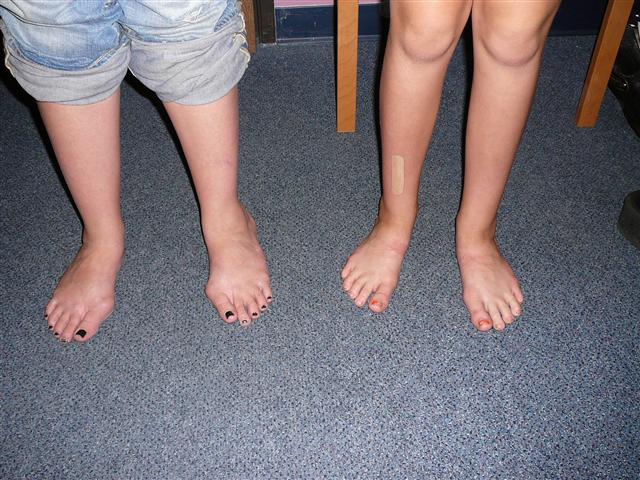
    mother daughter flatfeet

    flatfeet are alike. they come in different severities. That is where you need an expert to tell you how severe the flatfoot is. A foot exam is only part of the exam if you do not have standing weight-bearing x rays there is no way to measure the extent of the deformity. Then there is no way to really be able to decide what course of action as a parent you want to take. As well, an X ray can tell you if your child has a tarsal coalition- that is a condition where the bones have not separated in the foot and can be a big problem.

    The next criteria now that you had a exam including a gait analysis is to balance this with is this deformity causing pain and is the flatfoot causing your child not to participate in activities due to tiring easily.

    Flatfoot treatment in children

    There is much discussion as to if a child has a flatfoot, will they get arthritis in the feet when they are older? this has never sufficiently been answered in a large study. There seems to be a lot of anecdotal evidence that it may cause early arthritis. Think of a car that the tires are not properly inflated, the alignment with be off and you will oversteer the vehicle. As well your care will consume more gas. There are some studies that show people with flatfeet require higher oxygen consumption to perform the same activities as people with normal feet.

    Flatfoot treatment in children

    So now that you know if your child is having pain and you have had a gait exam a physical exam and an x ray. what should you do ? You can never go wrong with custom molded orthotics made by a pediatric trained foot doctor, it is like inflating the tires on your car. That is something that can help your child for many years to come. Surgery for flatfoot , that is the million dollar question. The simple answer only a good foot exam can really tell you if it is necessary. I was trained by an orthopedic surgeon that said all flatfeet should be fixed , just like if your child has knock knees you will surgically fix them so to with flatfeet. Some doctors only recommend surgery for extreme flatfoot cases. The answer lies somewhere in the middle. A severe deformity even without pain should be fixed to prevent future problems, a mild deformity with alot of pain should be fixed to get rid of the pain. Always try orthotics first to see if the pain resolves.

    Flatfoot treatment in children