Category: Foot tendon and ligament pain

conditions of the foot tendons and ligaments including heel pain and plantar fasciitis

  • Lateral Ankle Instability part two

    Lateral Ankle Instability part two

    Lateral Ankle instability part two. It’s been a few months and you keep spraining your ankle, you have tried a brace and even a custom brace. Now you are very frustrated and want to know your options. First thing is get a thorough exam. Is there a positive anterior draw sign. Is there excessive inversion of the ankle. Where x rays taken to rule out stress fractures and osteochondral defects. There is a special X ray technique that we perform called the stress inversion x ray exam this exam is quite helpful in telling us if there are ankle ligament tears. Next is an MRI. MRI’s are very helpful in letting you know if there are tears, However it is my experience not to fully rely on MRI’s for they can be wrong many times. I have had many patients that have had severe instability  with multiple sprains a week that had an MRI read as an intact ligament , but opted for surgery due to the major instability. What do you know, when I opened the area where the ligament was supposed to be there were none. Other things to be aware of are 2 conditions . One- torn peroneal tendons which can contribute to instability. It is important to repair torn peroneal tendons in order to maintain normal foot and ankle function. Also the position of your heel can contribute to ankle instability. It is called a varus positioned heel. If one has such a heel all the ligament repairs in the world won’t help because the stresses of the heel will re tear the ligaments. In those unique cases the heel bone needs to be re aligned into a proper position in order to obtain proper function. I have seen too many cases of ligament repairs gone bad because of other issues that were not identified .

    this is a letter from a patient of mine that had sustained a ligament tear while on the job fighting fires. ” Dear Dr Wrotslavsky  Thank you for fixing my ankle . After I tore my ankle ligaments I thought my career as a firefighter was over. I needed my ankles to work in order to go down steep slopes while fighting fires. I was also so worried because I loved to play basketball on the weekend and I could not after the ankle ligament tear. Thank you for Taking the time to carefully look over my MRI and explain everything in depth what was needed to be done surgically to fix it. I now have a very stable ankle for over a year and have not felt any pain and I am able to perform my job as a firefighter. and I can also play ball on the weekends. Thank you Dr Wrotslavsky   S.B. San Diego California

    Lateral Ankle instability part two

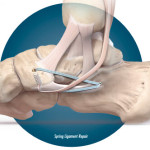
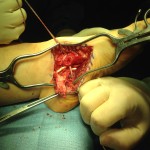
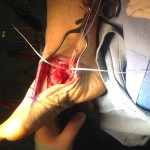
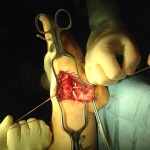
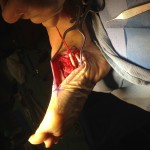
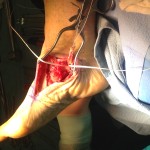
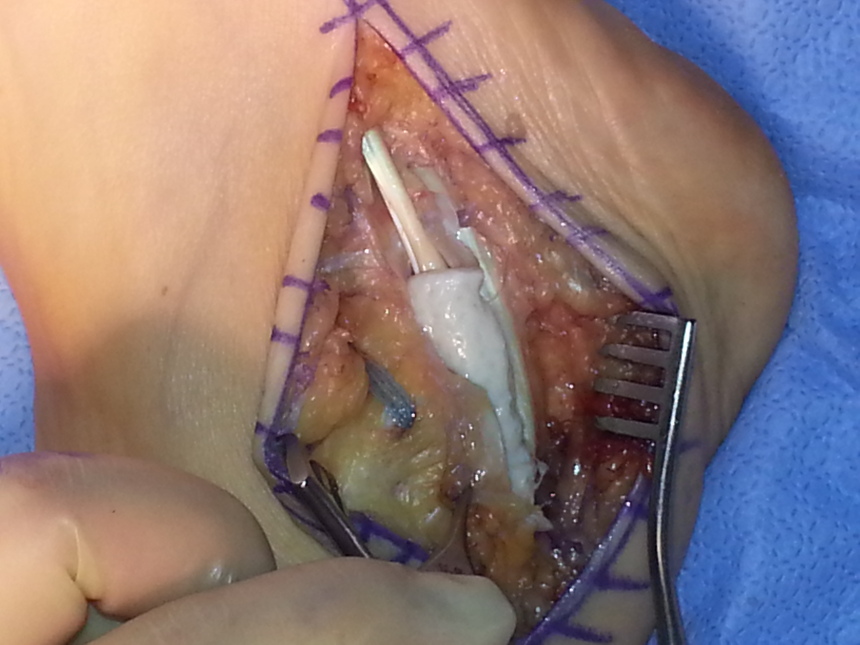
    below is a picture of a ankle ligament repair due to Lateral ankle instability along with a peroneal tendon repair using the internal brace technique

    peroneal tendon wrap with ATFL repair
    peroneal tendon wrap with ATFL repair


  • Flatfoot surgery

    Flatfoot surgery

    flatfoot surgery

    When Choosing a doctor to treat flatfoot it is important to make sure to try many non surgical treatments prior to choosing surgery. However sometimes non surgical treatments such as physical therapy , orthotics and different types of shoes fail in giving relief to your pain. Then you need to decide can you live with the pain as it currently stands and possibly get worse. Or do you want to try something invasive like surgery. Flatfoot surgery in the correct hands can be very rewarding for the patient. One needs to make sure that their surgeon is board certified by the American Board of Foot and Ankle Surgeons ( I am double certified by them in 2 types of foot and ankle surgery and reconstruction) I am also orthopedic fellowship trained in limb reconstruction. These are important in being able to choose the correct procedure and optimize you for the best possible results. Analysis of your foot and its deformity is done at our office with digital x rays that enable me to measure the exact angle of the deformity. One must realize that there are no guarantees with surgery and we can not make any promises.

    flatfoot surgery

    When is comes to flatfoot surgery there are 3 different ways to correct the deformity. And from those 3 ways there are hundreds of combinations and subsets. If you put ten surgeons in a room you will probably get fifteen ways that they would offer to correct it. Not that one is more correct than the other but there are many correct approaches as long as you stay within accepted guidelines and norms. The first way is called soft tissue balancing. This includes tendon tightening, transfers and lengthening. As well as capsular and ligament repair . The next way is called osteotomies , which means cutting the bones and moving them to different and more optimal positions. The last is called fusions. Where the surgeon fuses (locks ) 2 bones together in a corrected position. One can use various combinations of the three to attain the proper shape ind functioning foot.

    flatfoot surgery

    Remember always try a non surgical treatment such as a custom molded orthotic prior to doing surgery . Please contact me with any questions.


  • Flatfoot treatment in children

    Flatfoot treatment in children

    If you went to ten doctors regarding a medical issue chances are you will get eleven opinions. If you went to ten doctors regarding their opinion on Flatfoot treatment in children you will probably get fifteen different opinions. Why is this so and what information should you as a parent use to make a decision.

    Flatfoot treatment in children

    The three major treatment options are either do nothing, or custom molded orthotics in their shoes. or corrective surgery to fix the flatfoot deformity. One thing to consider is that no 2 feet are alike and no two

    Flatfoot treatment in children
    mother daughter flatfeet

    flatfeet are alike. they come in different severities. That is where you need an expert to tell you how severe the flatfoot is. A foot exam is only part of the exam if you do not have standing weight-bearing x rays there is no way to measure the extent of the deformity. Then there is no way to really be able to decide what course of action as a parent you want to take. As well, an X ray can tell you if your child has a tarsal coalition- that is a condition where the bones have not separated in the foot and can be a big problem.

    The next criteria now that you had a exam including a gait analysis is to balance this with is this deformity causing pain and is the flatfoot causing your child not to participate in activities due to tiring easily.

    Flatfoot treatment in children

    There is much discussion as to if a child has a flatfoot, will they get arthritis in the feet when they are older? this has never sufficiently been answered in a large study. There seems to be a lot of anecdotal evidence that it may cause early arthritis. Think of a car that the tires are not properly inflated, the alignment with be off and you will oversteer the vehicle. As well your care will consume more gas. There are some studies that show people with flatfeet require higher oxygen consumption to perform the same activities as people with normal feet.

    Flatfoot treatment in children

    So now that you know if your child is having pain and you have had a gait exam a physical exam and an x ray. what should you do ? You can never go wrong with custom molded orthotics made by a pediatric trained foot doctor, it is like inflating the tires on your car. That is something that can help your child for many years to come. Surgery for flatfoot , that is the million dollar question. The simple answer only a good foot exam can really tell you if it is necessary. I was trained by an orthopedic surgeon that said all flatfeet should be fixed , just like if your child has knock knees you will surgically fix them so to with flatfeet. Some doctors only recommend surgery for extreme flatfoot cases. The answer lies somewhere in the middle. A severe deformity even without pain should be fixed to prevent future problems, a mild deformity with alot of pain should be fixed to get rid of the pain. Always try orthotics first to see if the pain resolves.

    Flatfoot treatment in children


  • Heel Pain in Children

    Heel Pain in Children

    Heel pain in children can be a frustrating event for parents and their children alike. Typically heel pain in children

    heel pain in children
    calcaneal apophysitis

    will arise in nine to thirteen year old’s. I find it to be more prevalent in boys than in girls, but don’t dismiss it in girls. Many times i will have a parent present with their child  saying that he or she is very active in soccer or running or basket ball and their heel is hurting and they can not play anymore. It can come to the point where your child with heel pain is hobbling around.  Heel pain in children can arise from a few different causes. many times a tight Achilles tendon or an ankle equinus can bring about a over pull on the attachment to the heel bone otherwise known as the Calcaneus. This shortening of the achilles tendon then can cause an inflammation of the growth pate in the heel bone. This is known as Sever’s disease or Calcaneal apophysitis. The good news is that heel pain in children is easily treatable. Other reasons from a biomechanical standpoint that can cause this is excessive pronation which can cause a cascade effect along with a tight heel cord.

    So you are now asking how do you treat heel pain in children. It is very important to come in to a podiatrist with experience in pediatric feet in order to evaluate this. A thorough lower extremity physical exam and biomechanical exam is very important. As well as an x -ray to rule out unusual things that may not be obvious in an exam. There can be the odd stress fracture or even a tumor growth in the heel causing the pain. That is why we dont internet diagnose ourselves and especially our children.

    Heel pain in children can many times be solved with custom molded orthotics made by a podiatrist with experience in these issues. Stretching and physical therapy can play an important part to the treatment regimen as well. So make an appointment today if you or your child has heel pain so we can get you back to your activities.

    calcaneal apophysitis heel pain in children


    heel pain in children
    Severs disease
  • Mobilegs Ergonomic crutches

    Mobilegs Ergonomic crutches

    It’s time to change the way we think of traditional crutches. In this day and age injuries that require crutches have to be re-imagined for patient care, compliance, comfort level and safety. We welcome Mobilegs – Ergonomic Crutches that deliver comfort and stability. The unique design, comfortable feel and spring assisted performance is what sets this crutch apart from the rest.

    Standing with Mobilegs

    The handgrips face the rear side and point towards the outward position. The bend located in the shaft will be facing to the front and flows with the natural curves of the hips which is slightly away from the hips.

    The tripod position is the position you start to walk in using Mobilelegs. To begin in this position, you place the crutches to the front side of each foot about 4” to 6” inches away. Then stand on the better foot, placing most of your weight on the better foot. It is going to be a little bit of process, doing this for the first time. As with learning anything, but once done, you will see what a breeze; and how successful it is to walk using the spring-assisted crutches by Mobilegs.

    Here at the Advanced Foot And Ankle Center Of San Diego we have been giving our patients Mobilegs for use for injuries such as fractures and bad sprains as well as for use after surgeries that require being off their feet for a few weeks. Our patients have loved the ease of use and the ability for them to be able to get around and continue their life as normal.  They are impressed with the comfort and ease of use as well as less soreness in their arms and shoulders that people usually get with conventional crutches. At our center we care about every little detail to help in your recovery all the way down to the crutches.

  • Speeding Up Bone Fracture Healing part 1

    Crack! Snap! Pop! those are the last things you want to hear in your foot or ankle. Well now that it happened you go to the doctor an x ray is performed and you are diagnosed with a fracture. What is worse is that you are told you can not put weight on your foot and ankle for eight to twelve weeks. How are you going to get around, you are worried about being inactive and gaining weight sitting around. Sometimes if the fracture is displaced or rotated too much you need surgery and insertion of screws or plates and screws to hold the fracture in place. That is fine but the screw and plate does NOT heal the fracture, it only prevents it from moving around. How does the fracture heal?  First off the two fragments need to be immobilized, if the parts are moving then it will take longer to heal and will heal in an improper position causing more pain and loss of functionality. Second of all quit smoking if you  smoke. studies show smokers take 2 months longer to heal and many of them don’t ever heal the fracture. Nicotine causes the small blood vessels that bring blood to the fracture site to vasoconstrict thus causing a narrowing of the blood vessels and less of the good stuff to get there to help heal your fracture. By that inference even if you are using E- cigarettes It will also delay bone healing ( as well as wound healing if you have one).

    so now that you immobilized the fracture and don’t smoke what happens next. The bone heals by a biological process that takes place in three phases. Phase one is the reactive phase. Phase two is the reparative phase. Phase three is the remodeling phase.

    Next week we will discuss further what happens during these Phases and what can be done to speed up the process and get you back to running quickly. As always email me with any questions.

  • Amniotic membrane injections for Plantar fasciitis and heel pain

    So you have heel pain and you have tried everything such as stretching injections night splints physical therapy and even expensive custom molded orthotics. What to do? Now your doctor is recommending surgery and you cant afford to take time off from work. And you are just not interested in surgery. Great news there is now a solution that can solve your problem.  Placenta tissue. Whaaaat? you say,  that’s gross. Well not really there are studies that show it works . I have  have used  placenta tissue otherwise known as amniotic membrane with great results in my practice for wound healing and tendon and ligament inflammation. I will save the wound healing for another blog , but it works great for foot ulcers. So how does it work?

    First of all one of things to note about plantar fasciitis is that it is not fully an inflammatory disease. There are many studies that show it is a degenerative process, meaning the tendon/ fascia. That is why people have done well with platelet rich plasma injections also known as PRP injections and also coblation therapy (see my paper- Wrotslavsky poster Coblation ). These are methods that address the degenerative process of the tendon and helps regrow the micro circulation at the painful site.

    Amniotic tissue has been used in therapy for over 100 years in burn treatments ulcers and multiple surgeries of the eye. The way it works is by reducing inflammation and enhancing soft tissue healing. There are many growth factors in amniotic tissue such as EGF, TGF, FGF that help stimulate epithilial cell growth and migration and can grow skin in ulcers and wounds. There is also present PDGF A and B which help the growth of  collagen , fibroblasts and smooth muscle cells.

    The reason why this is becoming a treatment of choice for plantar fasciitis and other tendon and ligament injuries of the foot is that as opposed to PRP which requires your blood to be drawn or as opposed to coblation therapy the requires a trip to the operating room, Amniotic tissue comes in a liquefied form that can simply be injected into the affected site the same way one gets a steroid injection. This is a very exciting time in treatment of sports injuries email me with any questions drphilipw@sdfootdoc.com .