Category: Uncategorized

  • Foot Wounds in Non-Diabetics: Why They Matter and When to Seek Expert Care

    Foot wounds are often assumed to be a diabetic problem — but non-diabetics can and do develop serious foot wounds, and these are frequently overlooked or dismissed as “just a cut” or “just a blister.” Unfortunately, delayed evaluation is one of the leading reasons non-diabetic foot wounds progress to infection, tendon exposure, or bone involvement.

    Advanced Foot and Ankle Center of San Diego routinely treats patients without diabetes who are surprised to learn that their seemingly minor wound requires specialized surgical care.


    Why Non-Diabetics Get Foot Wounds

    Even in the absence of diabetes, a number of factors create risk:

    1️⃣ Trauma and Pressure

    • Blisters from new shoes

    • Toenail injury

    • Pressure from hiking, running, military boots, or ballet pointe shoes

    • Friction under bunions or claw toes

    2️⃣ Circulation Problems

    Peripheral arterial disease is not limited to diabetics. Even mild vascular compromise can delay healing.

    3️⃣ Structural Foot Problems

    • Flatfeet, cavus feet, bunions, or hammertoes create focal pressure points

    • Persistent rubbing → skin breakdown → open wound

    4️⃣ Immune Suppression

    Patients on steroids, cancer therapy, biologics, or with autoimmune disease may heal slowly.

    5️⃣ Neuropathy Without Diabetes

    Chemotherapy, alcohol use, B-12 deficiency, spinal pathology, and hereditary neuropathies can all lead to insensate wounds.


    Warning Signs a Foot Wound is NOT Harmless

    • Persistent drainage or scabbing after 2 weeks

    • Increasing redness, swelling, or warmth

    • Odor or discoloration

    • A callus with a dark center

    • Pain that increases instead of improves

    • You “can’t remember” when the wound started

    A wound that does not shrink by 50% in 2 weeks should be considered at risk for infection or limb-threatening complications — even in non-diabetics.


    Why Specialized Care Matters

    Foot and ankle wounds are not like skin wounds elsewhere.

    They sit over:

    • Tendons

    • Joint capsules

    • Bone

    • Surgical hardware (for patients with prior surgery)

    Once infection reaches deep structures, it becomes far harder to treat.

    Advanced Foot and Ankle Center of San Diego utilizes:

    • Advanced imaging to detect early bone involvement

    • Surgical debridement when necessary

    • Biologic wound products

    • Off-loading techniques used in limb salvage centers

    • Deformity correction to prevent recurrence

    This allows patients to save their limb without being sent from office to office hoping someone can manage the full picture.


    When a Foot and Ankle Surgeon Should Be Involved

    A wound specialist or podiatrist may treat the surface problem — but when the wound is deep, recurrent, or associated with deformity, it becomes a surgical and biomechanical issue.

    A foot and ankle–trained surgeon evaluates:

    • Bone alignment

    • Biomechanics

    • Soft-tissue envelope

    • Vascular and neurologic status

    • Limb salvage considerations before surgery is ever required

    This layered approach is standard at Advanced Foot and Ankle Center of San Diego.


    Takeaway

    Foot wounds in non-diabetics should never be ignored. They can be the first sign of vascular disease, undiagnosed neuropathy, or hidden deformity — and early intervention can prevent infection, hospitalization, and reconstructive surgery.

    If a wound has not healed in 2 weeks, is draining, or keeps returning, expert evaluation is critical — even if you do not have diabetes.
  • Deformity Correction of the Ankle: Modern Techniques and Dr. Wrotslavsky’s Expertise

    Ankle deformity can quietly steal a person’s mobility. It starts with subtle changes: the foot drifting inward or outward, a feeling of instability, or pain that comes and goes. Over time, the deformity becomes structural, leading to arthritis, tendon imbalance, and difficulty walking.

    At the Advanced Foot and Ankle Center of San Diego, deformity correction of the ankle is a major focus of care, and Dr. Wrotslavsky brings over two decades of experience in limb reconstruction, limb lengthening, and complex deformity analysis to every case.


    Why Ankle Deformity Happens

    Ankle deformity typically develops from one of the following:

    • Post-traumatic injuries
    Fractures, ligament tears, and cartilage injuries can change alignment even years later.

    • Arthritis
    Both post-traumatic and degenerative arthritis can cause progressive varus or valgus tilt.

    • Neuromuscular imbalance
    Conditions affecting nerves or muscles can cause one group to overpower the others.

    • Congenital or developmental causes
    Some patients are born with alignment issues that worsen over time.

    Regardless of the cause, the underlying problem is the same: the ankle joint is no longer lined up to take weight evenly. Once that happens, the joint wears down rapidly.


    Dr. Wrotslavsky’s Approach: Precision Deformity Analysis

    Dr. Wrotslavsky is fellowship-trained in deformity correction and limb reconstruction, including advanced training at one of the world’s premier limb lengthening centers. His approach combines:

    • Detailed deformity mapping
    Using long-standing X-rays, CT scans, and mechanical axis analysis to understand exactly where the deformity originates.

    • Soft-tissue assessment
    Evaluating ligament instability, tendon imbalance, and contractures that may be contributing.

    • Functional gait evaluation
    Understanding how the deformity affects movement and loading during walking.

    This type of analysis ensures the treatment plan is not just aimed at the joint but at the full biomechanical chain from knee to foot.


    Treatment Options: From Subtle Corrections to Advanced Techniques

    ✅ Nonsurgical Management

    Some early deformities can be stabilized without surgery:

    • Custom bracing

    • Orthotics

    • Physical therapy

    • Targeted injections

    • Activity modification

    But once the joint begins shifting or arthritis sets in, surgery becomes necessary to prevent long-term deterioration.


    Surgical Options for Ankle Deformity

    1. Osteotomies (Bone Realignment Surgery)

    This is often the preferred approach for younger and active patients. By precisely cutting and repositioning the bone, the surgeon restores normal alignment, allowing the ankle to bear weight evenly again.

    Dr. Wrotslavsky performs:

    • Distal tibial osteotomies

    • Supramalleolar osteotomies

    • Calcaneal osteotomies when foot alignment contributes to the deformity

    These procedures preserve the natural joint while dramatically reducing pain.


    2. Complex Frame-Based Correction

    For multiplanar deformities or limb-length differences, external fixation systems such as circular frames allow gradual, highly accurate realignment.

    Dr. Wrotslavsky is widely experienced in:

    • Taylor Spatial Frame (TSF)

    • Ilizarov techniques

    • Gradual correction for severe deformity and limb salvage cases

    This approach is especially effective for patients with deformities that cannot be corrected in a single operation.


    3. Ankle Arthritis Reconstruction

    When deformity has already caused significant joint damage, correction is combined with reconstructive procedures:

    • Ankle arthroscopic debridement with realignment
    • Ankle fusion (arthrodesis)
    • Total ankle replacement with deformity correction

    Dr. Wrotslavsky’s experience in realigning the limb before or during joint reconstruction helps ensure better long-term outcomes and implant longevity.


    What Sets Advanced Foot and Ankle Center of San Diego Apart

    Patients often come after being told nothing more can be done, yet precise deformity correction opens options that were not previously considered. What stands out is:

    • Expertise in complex deformities others may avoid

    • Deep experience in limb salvage

    • Integration of biomechanics, reconstruction, and joint preservation

    • Over 20 years treating everything from subtle instability to severe post-traumatic deformity

    It’s a comprehensive, thoughtful, and highly individualized approach.


    When to Consider Deformity Correction

    A patient should be evaluated if they experience:

    • Visible tilting of the ankle

    • Chronic instability

    • Pain on uneven ground

    • Limited range of motion

    • Progressive arthritis

    • A history of ankle fractures with lingering deformity

    Early intervention can dramatically improve long-term mobility.


    Conclusion

    Ankle deformity isn’t just a structural problem; it’s a mechanical challenge that requires precision, experience, and a deep understanding of limb alignment. At the Advanced Foot and Ankle Center of San Diego, Dr. Wrotslavsky brings world-class expertise in deformity correction, limb reconstruction, and advanced surgical techniques to help patients regain stability, function, and quality of life.

  • Healthy Feet, Independent Life: Specialized Foot Care for Seniors in La Jolla

    Absolutely, Phil. Here’s the revised blog with the additional La Jolla independent living communities—Pacific Regent La Jolla, Atria La Jolla, and Bayshire Torrey Pines—included for a more comprehensive and locally targeted message:


    Title: 

    As we age, maintaining mobility becomes essential for independence, confidence, and quality of life. At Advanced Foot and Ankle Center of San Diego, we proudly offer expert foot and ankle care to seniors living in independent retirement communities throughout La Jolla, helping you stay on your feet—comfortably and safely.

    Whether you’re living at White Sands La Jolla, Casa de Mañana, Vi at La Jolla Village, Belmont Village Senior Living, Pacific Regent La Jolla, Atria La Jolla, or Bayshire Torrey Pines, our board-certified specialists are here to support your foot health with compassion, experience, and the most advanced treatment options available.


    Why Foot Care Matters More as We Age

    Our feet carry us for a lifetime, but over time, common conditions like arthritis, bunions, hammertoes, corns, calluses, neuropathy, and fungal infections can make walking painful and risky. Diabetes, circulatory issues, and balance changes further increase the chance of complications from untreated foot problems.

    Routine podiatric care can help prevent small issues from becoming serious mobility threats. That’s why our clinic emphasizes regular checkups, safe toenail trimming, skin care, and treatment of foot pain, all tailored to the unique needs of older adults.


    Services We Offer

    At the Advanced Foot and Ankle Center of San Diego, we provide a full spectrum of services, including:

    • Diabetic foot exams and wound prevention
    • Toenail care for thickened, fungal, or ingrown nails
    • Callus and corn management
    • Arthritis and joint pain treatment
    • Fall risk assessment and balance support
    • Custom orthotics and offloading shoes
    • Minimally invasive procedures when needed
    • Home care recommendations to keep you active and safe

    Our office is centrally located and easily accessible for La Jolla seniors. We’re also happy to coordinate with your primary care provider or family members to ensure continuity of care.


    Proudly Serving La Jolla’s Senior Communities

    We regularly care for patients from:

    • White Sands La Jolla – a premier oceanfront senior living community
    • Casa de Mañana – known for its charming historic setting and active lifestyle
    • Vi at La Jolla Village – luxury retirement living near UCSD
    • Belmont Village La Jolla – offering exceptional hospitality and care
    • Pacific Regent La Jolla – a vibrant high-rise independent living community
    • Atria La Jolla – known for its warm atmosphere and personalized care
    • Bayshire Torrey Pines – offering comfortable, supportive senior living in a serene setting

    If you live in any of these communities—or are a loved one helping someone who does—know that our practice welcomes new patients and offers individualized, respectful care that prioritizes comfort and safety.


    You Deserve Expert Foot Care

    Led by Dr. Philip Wrotslavsky, a double board-certified foot and ankle surgeon with advanced training in limb salvage and reconstruction, our team understands how to keep seniors active, independent, and pain-free. With over 20 years of experience caring for older adults, we recognize that good foot care is good health care.

    Don’t wait until pain or infection forces you to stop doing what you love. Contact Advanced Foot and Ankle Center of San Diego today to schedule an appointment and step into a more comfortable tomorrow.


  • Decision Making Factors in Choosing Your Podiatrist

    At Advanced Foot and Ankle Center of San Diego, we treat every patient like family—because we’re a family-owned practice.

    Over the past decade, Wall Street has quietly moved into exam rooms and operating suites. Venture capital and private equity firms are buying up podiatry practices across the country, turning independent medical clinics into profit-driven corporations. This trend may be good for investors—but it’s rarely good for patients.

    At Advanced Foot and Ankle Center of San Diego, Dr. Wrotslavsky has taken a different path. For close to 20 years, this family-owned practice has stayed completely independent, with no outside investors, and no shortcuts when it comes to care. While many practices have “sold out,” Dr. Wrotslavsky has remained committed to one thing: doing what’s best for the patient—every time.

    What Happens When Venture Capital Takes Over?

    Private equity doesn’t invest in podiatry out of a passion for foot health. These firms are focused on maximizing return on investment, often within a 3–5 year window. Once a practice is acquired, the pressure is on to increase profitability—fast.

    That can lead to:

    • Shorter appointments and *higher patient volume*—making it harder to get a thorough evaluation.

    • Limits on treatment options, especially if newer technologies or procedures don’t align with the profit model.

    • Administrative control over clinical decisions, where medically trained doctors are second-guessed or overruled by non-medical executives.

    • High staff turnover, as experienced teams are replaced to cut labor costs.

    The end result? Patients receive care that’s less personalized, less thoughtful, and more about revenue than results.

    How to Tell If Your Doctor Is Truly Independent

    If you’re unsure whether your provider is part of a corporate group, here are a few signs to look for:

    • Does the practice still have the original doctor’s name on the door? Large groups often rebrand clinics under umbrella names.

    • Are treatment plans thoroughly explained and tailored to you—or do they feel standardized?

    • Do you see the same provider consistently, or is there frequent turnover?

    • Can your doctor refer you anywhere, or only within a restricted network of facilities and surgeons?

    • *When you ask about treatment options, do you hear about what’s best for _*you_—or what’s covered, available, or most commonly done?

    Don’t be afraid to ask directly: “Is this practice independently owned? Are your treatment recommendations ever influenced by non-physician administrators?” A good doctor will appreciate the question—and have nothing to hide.

    Why It Matters

    When a practice is owned by investors, the goal is profit. When a practice is owned by a physician, the goal is healing. Dr. Wrotslavsky is Board-certified by the American Board of Foot And Ankle Surgeons and has dedicated his career to treating complex foot and ankle problems with integrity, skill, and full clinical autonomy. There’s no corporate playbook here—just honest, high-quality care backed by decades of experience.

    At Advanced Foot and Ankle Center of San Diego, we treat every patient like family—because we’re a family-owned practice. We haven’t sold out to Wall Street, and we never will.

    Your feet carry you through life. Make sure your care is grounded in independence, not investor interests.

  • Exosome Therapy Foot and Ankle

    Exosome therapy is an emerging field in regenerative medicine that holds promise for treating various medical conditions, including joint and tendon injuries. Exosomes are small vesicles that play a crucial role in cell-to-cell communication by transporting proteins, nucleic acids, and other molecules between cells. They are derived from stem cells, and their therapeutic potential lies in their ability to modulate cellular processes and promote tissue repair.

    In the context of joint and tendon health, exosome therapy is being explored for its regenerative properties. Here’s how exosome therapy may be applied to treat joint and tendon conditions:

    1. Anti-Inflammatory Effects: Exosomes derived from certain stem cells have demonstrated anti-inflammatory properties. Inflammation is a common factor in joint and tendon injuries, and reducing inflammation can contribute to the healing process.

    2. Tissue Repair and Regeneration: Exosomes can stimulate the regeneration of damaged tissues by promoting the proliferation and differentiation of cells involved in tissue repair. This can be particularly beneficial for tendon injuries and joint degeneration.

    3. Modulation of Immune Response: Exosomes may modulate the immune response, helping to create a favorable environment for tissue repair. This is important in conditions where the immune response may be contributing to ongoing damage.

    4. Promotion of Angiogenesis: Exosomes can promote the formation of new blood vessels (angiogenesis). Improved blood supply to the affected joint or tendon can enhance the delivery of nutrients and oxygen, facilitating the healing process.

    5. Minimization of Scar Tissue Formation: Exosomes may help minimize the formation of scar tissue, promoting more natural tissue healing. This is particularly relevant in tendon injuries where excessive scar tissue can lead to reduced flexibility and function.

    It’s important to note that while exosome therapy shows promise, it is still a relatively new and evolving field. Research is ongoing to better understand the mechanisms of action, optimal sources of exosomes, dosage, and long-term effects. Clinical trials are being conducted to assess the safety and efficacy of exosome therapy for various medical conditions, including musculoskeletal disorders.

    If you are considering exosome therapy for joint or tendon issues, it’s crucial to consult with a qualified healthcare professional who can provide guidance based on your specific condition and the current state of scientific evidence. As of my last knowledge update in this field, there may have been further advancements in the field.

  • Levana Allograft Adipose Matrix Injections:

    An Innovative Solution for Fat Pad Atrophy and Heel Pain Have you ever experienced severe foot pain by the ball of your foot or heel pain when standing or walking for extended periods? If so, you may have fat pad atrophy, a condition where the fatty tissue on the bottom of your foot wears away, causing discomfort and pain. While this condition can be caused by aging or excessive pressure on the feet, it can be challenging to find effective treatment options. Fortunately, a new solution has emerged in the form of Levana allograft adipose matrix injections. Levana allograft adipose matrix is a unique injectable solution that contains donated human adipose tissue. The tissue is processed to remove cells and preserve the extracellular matrix, which contains a complex mixture of proteins and growth factors. This matrix is then injected into the affected area to stimulate tissue growth and regeneration. One of the primary advantages of Levana injections is that they are minimally invasive and can be performed in an outpatient setting. The injections are typically administered under local anesthesia, and the entire procedure takes less than a half hour. After the injection, patients can typically resume their normal activities within a day or two (depending on the area that was injected). Levana injections have been shown to be effective in treating a variety of foot conditions, including fat pad atrophy of the foot and heel pain. The adipose matrix helps to restore the natural cushioning of the foot, reducing pain and discomfort. In addition, the growth factors in the matrix can promote tissue regeneration, helping to restore damaged tissues and prevent further degeneration. Clinical studies have demonstrated the safety and effectiveness of Levana injections. One study evaluated the use of Levana injections in patients with plantar fasciitis, a common cause of heel pain. The study found that patients experienced a significant reduction in pain and improved function after the injection, with no significant adverse events reported. Another study evaluated the use of Levana injections in patients with diabetic foot ulcers, a condition that can be difficult to treat due to poor circulation and impaired wound healing. The study found that Levana injections significantly improved wound healing and reduced the risk of infection, with no adverse events reported. In conclusion, Levana allograft adipose matrix injections offer a promising new solution for patients suffering from foot conditions such as fat pad atrophy and heel pain. These injections are safe, effective, and minimally invasive, making them an attractive option for patients who have not responded to other treatment options. If you are experiencing foot pain or discomfort, make an appointment today for an evaluation at the Advanced Foot And Ankle Center of San Diego

  • Store Purchased Orthotics vs Custom

    Store Purchased Orthotics vs Custom

    Retail vs Custom Orthotics

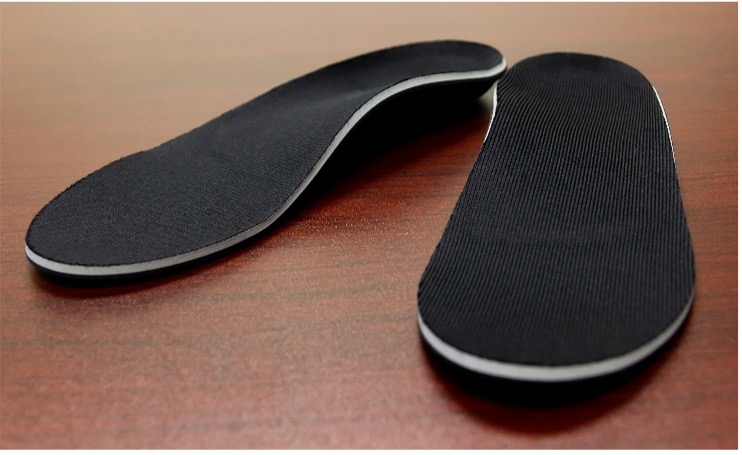
    At their core, orthotics are devices that are placed in shoes to change how your feet meet the ground during weight-bearing. There are many different modifications that can be added and many different materials that are used to make a pair of orthotics for different purposes. As a result of this diversity and flexibility, it has become a powerful solution we as podiatrists are able to offer our patients to get them back to full activity and reduce their foot pain. But what’s the difference between a custom orthotic and a store-bought one?

    Over-the-Counter Orthotics:

    Affordable and Do the Job…Sometimes

    It is true that most people would benefit from a supportive orthotic in their shoes.

    However, it is also common for patients to come to the office with a bag of different store-bought orthotics that did nothing to aid their self-diagnosed cause of foot pain. An over-the-counter orthotic can, at times, be the perfect solution for patients that only require a little bit more arch support (e.g., plantar fasciitis). The problem is that not all brands of orthotics provide enough support, if at all. There is also the case where there is an additional deformity or other undiagnosed causes of foot pain. A retail orthotic is usually unable to offer anything but arch support unless modifications are made to it. Customizing a retail orthotic is possible, but usually, the modifications are temporary and often done with sticky felt that lasts for 1-2 weeks at most. However, they remain an attractive option because they are relatively affordable and work in a limited capacity.

      Pros   Cons
    · Cheaper · Limited modification ability
    · Gives support (sometimes) and/or cushioning · Substantial difference between brands
    · Can’t correct underlying deformity

    Custom Orthotics:

    A Lasting Device Tailored to You

    Arize 3-D Scan of feet for custom orthotics
    3-D Digital scan

    Custom orthotics are just that, custom. They can be modified to fit into any type of shoe, and specific materials are chosen to meet a patient’s comfort and needs. They are molded via different techniques to your specific foot and modifications are added for a patient’s specific biomechanical needs down to the millimeter. Often, they are used to add support or decrease pressure at specific points to relieve pain. They can be used to rebalance a leg length discrepancy to prevent compensatory pain at the knee/hips/back or can be used to reduce motion at joints to prevent arthritic pain. This is all based on a comprehensive lower extremity physical exam and gait analysis allowing us to evaluate the different deformities or biomechanical tendencies of each patient to create a truly patient-tailored device.

    The Cost: An Investment into a Healthy Lifestyle

    Everyone wants to be healthy given the choice. However, foot conditions can cause a significant roadblock to an active lifestyle, a necessity for overall health. It becomes a self-defeating cycle. You want to be healthy so you try to exercise, but then you develop foot/ankle pain and you can’t walk, let alone exercise. When the solution is a custom orthotic, there is a price attached. However, it must be viewed as an investment into a pain-free active lifestyle and means to living a long and healthy life. Just as you buy a gym membership or home exercise equipment (weights, stationary bikes, etc.) for hundreds to thousands of dollars, a custom orthotic is a tool to get you healthy, active, and back to the pain-free daily life you deserve.


    Written by Dr. Gavin Tsuchida

    Dr. Tsuchida recently moved to San Diego from New York and is enjoying the beach and hiking when he’s not providing thoughtful, personalized care for his patients.

  • Bathroom Toe Surgery Gone Wrong!

    Bathroom Surgery Gone Wrong!

    There is a colloquial term that we sometimes throw around called “bathroom surgery.” Typically, when we use common household items to perform procedures on ourselves that we think we can do with what we have lying around to avoid a trip to the doctor. In the podiatry world, it is arguably the most encountered when a patient has an ingrown nail.

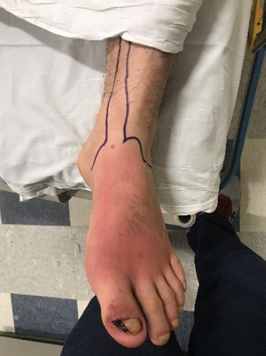
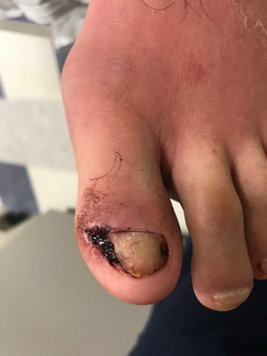
    This was the case for this unfortunate patient I saw years ago who had attempted to use a kitchen knife to take care of his own ingrown nail. He presented to the emergency room because he was having a fever and felt like his heart was beating too fast. He also noticed his left foot was turning red and swollen and the redness had been streaking up his ankle (a sign of a serious and progressing infection). After the initial workup by the Emergency docs, they called a sepsis code, and I was consulted to come to evaluate his foot. Long story short, this patient ended up staying in the hospital and requiring weeks of IV antibiotics. Luckily, he didn’t require surgery, and his infection eventually resolved. This is a rare and serious complication of an ingrown nail which can usually be treated the same day in the office with simple removal of the offending piece of nail.

    The point of the story is that even for something as simple as an ingrown nail, complications are more likely to occur if the initial procedure is handled improperly. Household tools are often not as clean as we’d like to believe, and improper techniques or unnecessary procedures can lead to serious consequences. This is doubly so for patients with other medical conditions that could complicate healing or compromise their immune system. It is vital to seek the right help and not to wait until it’s serious.

    If you have an ingrown nail or another urgent issue, please seek the appropriate care, and make an appointment. Especially for urgent issues, space can be made in the schedule so you can be seen the same day or the next day!

    Dr. Gavin Tsuchida

  • Cartilage Repair Painful Big Toe And Ankle

    Are you experiencing

    • Big Toe or Ankle Joint Pain?
    • Stiffness or Reduced range of motion?
    • Increased pain during cold, damp weather
    • Difficulty moving the big toe up and down?
    • Inflammation and swelling around the joint, especially the top?
    • Pain that worsens with an increase in activity?
    • Increased difficulty bending the toe?
    • Inability to feel comfortable in shoes, particularly high heels for women?
    • Pain and stiffness in the joint at the base of the big toe when walking, standing or bending?
    • Have you been told you need a fusion or toe surgery?

    Subchondral Solutions S-Core® is novel device to restore the joint back to its original function and allow you to get back to your normal activity faster.

    All Joints Are Not Created Equal

    The S-Core® Platform utilizes a simple reproducible minimally invasive solution for a multitude of different joints including but not limited to the knee, ankle, toes, hand, wrist, shoulder, and elbow. The extremely strong time zero fixation allows you to return to normal activity in a fraction of the time compared to other procedures. Early range of motion has been shown to increase circulation, reduce stiffness, reduce swelling and reduce healing time.

    The Procedure

    Your joints are constantly in use and are often under a level of stress that can lead to pain from over-use and/or injury.

    Over time stress can cause damage to the bone surrounding the injury. Think of this bone damage like a pothole in the road. If you delay fixing It the pothole will grow wider and deeper. When one has Cartilage damage such as an Osteochondral defect of the talus or head of the first metatarsal, the underlying bone disease needs to be addressed in order to repair the cartilage.

    The S-Core® Procedure has been designed to reconstruct the foundation of the joint and repair fractures in the bone to help reduce or eliminate the pain and to return the joint to its bio-mechanical function. Similar to fixing a pothole. This allows for the cartilage graft over it to work.

    Depending on the joint, the S-Core® implant can be used in both minimally invasive “arthroscopic” and open incisional procedures. The surgery takes 15-20 minutes and patients go home the same day.

    The S-Core® implant has a multitude of unique features making it unlike anything on the market.

    -Fenestrated: Allows for optimal blood flow through the implant supporting the bodies healing potential.

    -Chambered: Minimal bone removal preserves pedicel of bone for additional surface area.

    -Hydroxyapatite Coated: Improves Osteointegration.

    The combination of these features and others stabilize the subchondral bone mechanically like rebar for concrete and the hydroxyapatite coating allows for the formation of new cartilage to grow over top.

    Recovery

    Patients typically delay or even avoid surgery due to the lengthy recovery time even when the pain persists. Delaying surgery will delay your recovery. Surgical procedures using S-Core® may help to reduce recovery time.

    You are not alone. Big Toe Pain affects over 54% of people age 50 or older in the US annually. Schedule your consultation with Dr. Wrotslavsky today.

    — At Advanced Foot & Ankle Center of San Diego, your team of highly experienced joint-care experts will help find your best path forward, whether that involves advanced pain-management therapies or leading-edge joint replacement as well as Cartilage repair.

    S-Core subchondral solutions osteochondral defect cartilage repair
    S-Core subchondral solutions osteochondral defect cartilage repair
  • Chronic Care: Living Fully With a Chronic Health Condition


    Subconsciously most people know that their good health is their most important asset, and one worthy of keeping through care and attention. In practice, however, healthy people tend to take their good health for granted – until they receive a diagnosis of a chronic condition that reverberates like a punch to the gut. Many chronic conditions can be managed through lifestyle and diet changes, such as avoiding gluten if you’ve been diagnosed with celiac disease. Others require more careful planning and management.
    It’s important, too, to understand how such a diagnosis can impact your health in other, seemingly unrelated ways. For example, diabetes can lead to certain foot issues, like those seen and treated at Foot Doctor San Diego. It’s also not uncommon for people with a chronic diagnosis to feel so overwhelmed and sad that it can lead to mental health disorders like depression. Early and practical action can help people cope with their diagnosis by making adjustments that allow them to retain many of the activities they enjoy.
    Don’t be a passive host to your condition
    Taking action is the best thing you can do following your chronic condition diagnosis. It may take you a few days or even weeks to absorb what you heard and what the future may hold, but once you’ve regained your composure, don’t concede an early defeat by doing nothing! Getting started earlier can make you feel better both physically and emotionally.
    Set a plan to help you remember to take any medications. Ask your family to participate in some of the lifestyle changes you’re making, such as eating and exercising, to both motivate you and keep you emotionally connected. Together you can create meal plans to keep you on track with healthy eating; if you need assistance, ask your medical team for a referral to a dietitian. Ask your treating physician for approved physical exercise activities. Keep a daily journal of how you feel, and any symptoms – you may feel like you are relying heavily on your doctor, but in reality, you’re the CEO of your health, and your doctor needs to rely on you to stay on top of how you are feeling.
    Plan for the future
    Your diagnosis may have your mind going to end-of-life considerations, such as creating a living will. Those are activities that everyone should complete, regardless of health, so if that crosses items off your to-do list, then do them. But you should also plan for your short-term needs. Even if they aren’t significant, you will have less to worry about and deal with later when you want to devote your time to pleasurable things and not tasks.
    For example, will your diagnosis negatively impact your future mobility? In addition to foot problems that diabetic patients can encounter, such as diabetic neuropathy and claw toe, other chronic conditions can also affect your feet and thus, your mobility. Arthritis can cause foot pain and conditions such as bone spurs. Osteoporosis can weaken your bones and lead to foot fractures. Even chronic and serious bunions can cause mobility and balance issues, making it difficult to navigate stairs and walk long distances.
    Where you live can be important to how you live
    Taking into account any current or future mobility issues, assess whether your current living environment is adequate, or even if it can aggravate your symptoms or condition. Consider moving into a more accessible home, such as from a two-story to a one-story. Get a jump on successfully securing the perfect home when you find it by checking your credit report, assessing your income and expenses to see how much home you can afford, and getting pre-approved for a home mortgage. Armed with that information, you can scour online sites and find a real estate agent to help you find the right home in the right neighborhood.
    Once you’ve found a home, you can make your life easier by hiring a professional moving service to take care of some or all of your moving needs. Research local movers on Angi to discuss exactly what you need and to get a quote. Before calling, look at their online reviews to screen out potential problems. Once you get your verbal quote over the phone, ask them to send it in a written estimate; if they’re legitimate, they won’t put a firm quote in writing without coming to your home to personally evaluate the scope of the job and then formulate the cost.
    Health redefined
    Living with a chronic condition requires some adjustments. By taking early action and tangible steps to make those adjustments, you’re redefining and adapting to what “healthy” now means for you. Getting on with your life, and getting the most out of it both physically and mentally, is the most important thing. Keep listening to your body and loop those conversations back into your continued care.
    Find additional helpful articles like this on Foot Doctor San Diego / La Jolla Podiatrist