Advanced Foot And Ankle Center Of San Diego

Category: Blog

  • Charcot Foot And Ankle Reconstruction

    I was recently asked to give a lecture on Charcot foot and ankle reconstruction and thought that this was an opportune time to write a blog about the new updates and treatments regarding Charcot foot and ankle reconstruction.

    Charcot right foot and ankle reconstruction has undergone many types of treatment options over the past 100 years.  We have moved far past needing to amputate patients that are affected with Charcot neuroarthropathy, as the first line of treatment.  Most of the patients today can do well with reconstruction techniques that allow them to go back into her shoe or to be in a boot.

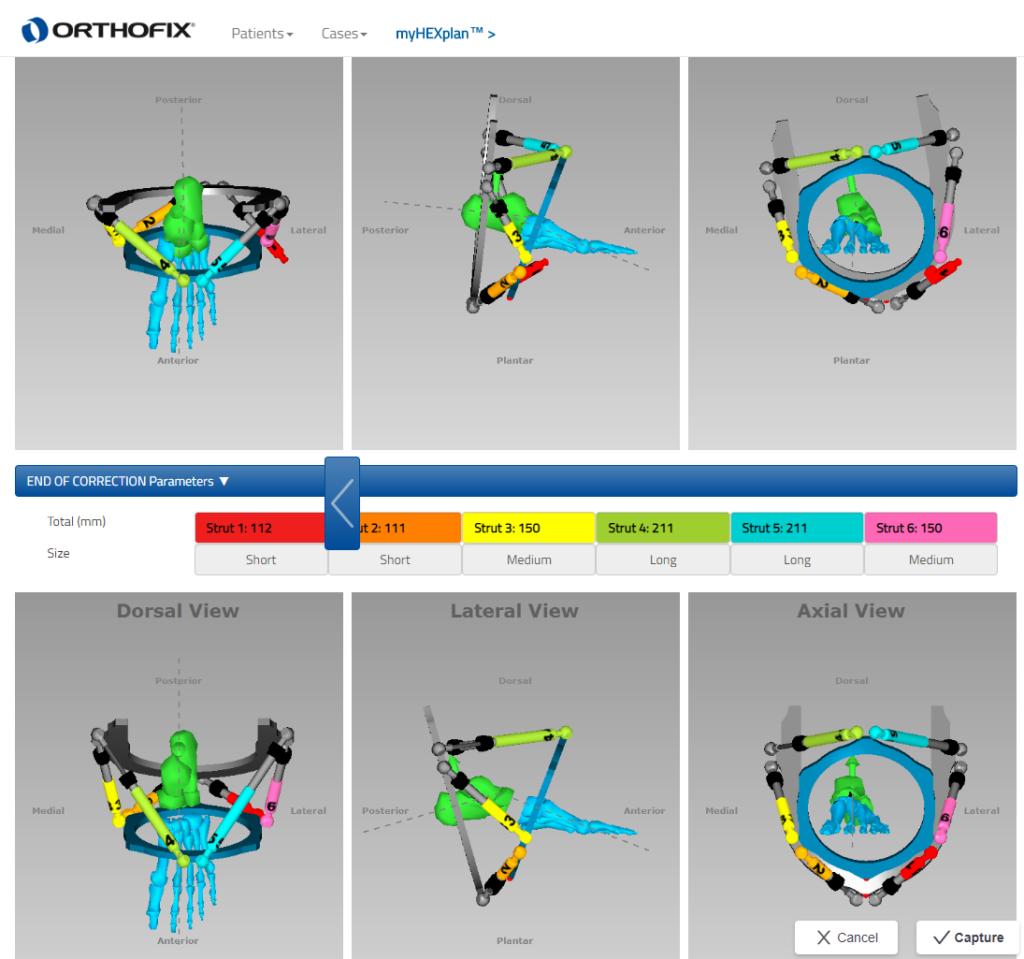
    With regard to Charcot foot reconstruction, many advancements have been made in deformity analysis and deformity correction techniques that allow for minimal removal of bone and minimal removal of soft tissue that also allow for maintaining the length of the foot.  We used various computer deformity programs that allow us to accurately measure how much bone needs to be removed as well as the precise area of where to make the bone cuts when necessary to reposition the bone after the collapse of a Charcot foot or ankle.

    1 of the big advances that we have been able to make with Charcot reconstruction is the beaming technique.  Intramedullary beaming of the foot and the ankle allow for a stable structure that makes it easier for the bones to heal.  As opposed to in the past when big incisions were made with the application of plates with multiple screws the beams have better strength and from a mechanical standpoint hold a better than plates and screws.  Due to the fact that people with Charcot have weakened bones, you will notice that many people Charcot have external fixators applied. Those external fixators are very important in allowing for the beaming procedures to be successful as it prevents 1 from moving the leg around or putting too much weight on their leg while the beams are working.  Some people have very large deformities that require a technical gradual deformity correction.  Gradual deformity correction is very similar to when 1 has braces for teeth.  If one will go to an orthodontist on the orthodontist would say to them,  that they were going to take your teeth and crank them into the right spot you get pretty nervous and run out of the office.  What you may have expected to hear their input on braces that slowly take the teeth and put them back in the right position.  Similar is with the foot and ankle there are many deformities that you cannot put back into the right position and 1 shot and requires a two-stage procedure.  That is why you see some of these external fixators with rods next to them that the little rod used to turn very slowly and will slowly correct the foot in the right position. One of the big advancements that we have now with deformity correction are computerized programs that allow us to take exact measurements of where the bones are where the deformity is and we are exactly to make the bone cuts so that the healing is done in the most optimal fashion.
    Computer assisted Charcot reconstruction
    computer-assisted deformity correction.

    Some of the updates that we find with ankle Charcot are similar to foot Charcot in the sense that the combination of rodding and external fixation is vital for recovery.  This comes from the same idea that since the bones are very weakened with Charcot just putting in a plate with some screws is destined for failure.  Most cases of ankle Charcot require an intramedullary rodding to hold it in place with an external fixator on top of that.  Once the healing is complete and the external fixator can take it off and then you have the rod left and there.  Most people with ankle Charcot end up doing better with this technique.  Up until the last few years when this technique became more excepted many people had failures of ankle reconstruction secondary to Charcot surgery because this was not to the excepted technique.  Now that this is the excepted technique we have gone from a 50% success rate to over 90% success rate.

    Lastly, there are many other tricks and techniques that we have found that works very well with making sure the skin heals properly.  There have been some great advancements and negative pressure therapy on incisions to help the incisions heal faster.  Utilizing all of these techniques we were able to help people with Charcot foot and ankle get back to the regular activities.  And at least prevent many amputations that are unnecessary because of these new techniques.

  • Orpyx Orthotics Help Prevent Diabetic Foot Ulcers from Recurring

    There are over 136 million people in North American that have diabetes or are pre-diabetic. If you are reading this, odds are you are one of them. When you have diabetes there are a lot of things going on that you must watch for. Many people with diabetes, about 70%, have a condition called neuropathy, which means you can’t feel your feet. When you can’t feel pain in your feet it means you can’t feel when there is an issue, like a rock in your shoe, laces tied too tight or too much pressure being placed on the bottoms of your feet. These situations can quickly develop into wounds, which if not managed appropriately can last for years and in the worse cases end up with an amputation. Orpyx orthotics can help prevent diabetic foot ulcers from recurring.

    Somewhere in the world, a leg is lost to diabetes every 30 seconds, but the good news is 85% of the time this can be prevented with proper care. FINALLY, a solution!

    Recently a new technology from Orpyx® Medical Technologies caught my attention. It is a sensory custom orthotic system that monitors movement, pressure, and temperature on the bottom of your feet. It provides real-time alerts and offloading instructions when sustained, high-pressure levels occur. This is all done through a mobile app that is downloaded to a smartphone or through a display device provided by the company. You and your healthcare provider can use this information to help prevent these wounds from recurring and keep your feet healthy. In fact, a study was recently published with people that had diabetes, neuropathy, and at least one wound in the past twelve months. During the 18 months of the study, these patients saw an 86% reduction in the diabetic foot ulcer reopening using the Orpyx® SI technology.

    The best treatment plan for diabetic foot ulcers is to prevent them from happening. Orpyx SI sensory insole ( custom-molded orthotics) system is one way to help keep your feet healthy. Check them out! Orpyx custom-molded orthotics can help prevent diabetic foot ulcers from recurring.

    digital orthotics
  • Charcot Foot Treatment


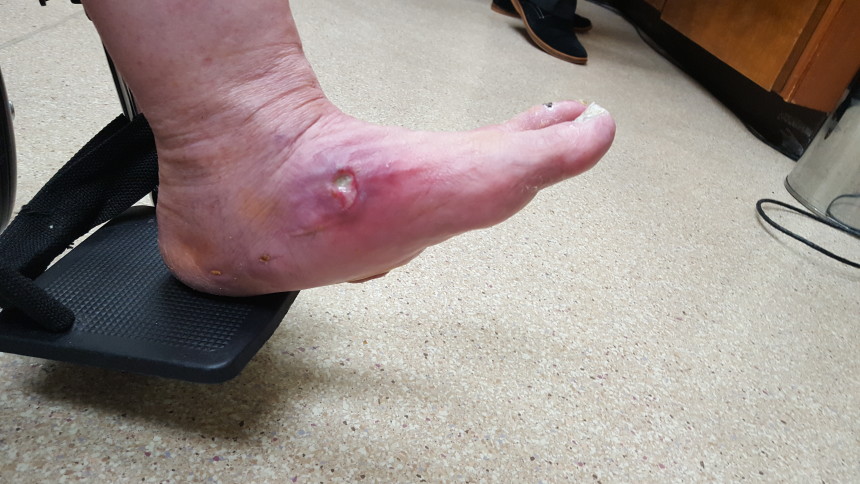
    Charcot foot requires expert treatment from surgeons that have experience treating this condition. When one is diagnosed with Charcot foot they should seek out a doctor that can show them how many of these they treated successfully. One with Charcot foot or ankle is at a high risk for loss of limb due to many factors associated with the disease. We have developed techniques that allow for accurate and reproducible treatments to save a limb diagnosed with charcot foot.

    When one is told as part of their Charcot foot treatment that they need to live in a boot (sometimes known as a CROW boot), this is helpful to prevent wounds. However this treatment does not correct the deformity associated with the disease. Unless one corrects the deformity one is always at risk to develop the ulcer and lose the leg.

    There have been many advancements in treating charcot foot deformities. Dr Wrotslavsky lectures nationally and internationally regarding proper treatment and techniques . We are able to use computer models to analyze the deformity and slowly correct the deformity. This puts much less stress on the nerves and arteries and veins in the area. Through these and other methods we can put one in a much better position to prevent amputation in charcot foot.

    If you have a foot wound and it is taking too long to heal , come in for another opinion today. Many of these wounds have other underlying issues that once addressed will get rid of the wound .

    charcot foot
    Charcot foot
  • Ankle Sprains

    Ankle Sprains

    Sprained ankle, how about if you sprain your ankle multiple times a year. Are you one of the millions of people that suffer with multiple ankle sprains and chronic ankle instability. Do you wonder why whenever you are about to go out on a hike you are afraid to roll the ankle. Many ankle sprains and other ankle injuries can get better on their own or with physical therapy. There are times you will need a brace to stabilize the ankle. Unfortunately there are people out there that have not gotten relief from those methods and continue to roll their ankle. I have developed advances in surgical stabilization of the ankle via a minimal incision approach. This allows for the patient to recover faster and easier.

    It is vital for a patient to have the proper workup to evaluate the extent of the ligament damage. Ankle Range of motion, inversion , eversion , anterior draw sign are important parts of the physical exam. Radio graphic exams should include the typical 3 views of the ankle but should also include a stress inversion view. The stress inversion view can be better than an MRI. As it can tell you if the ligament is functioning. Just because an MRI says the ligament is intact it does not mean that it works. In a stress inversion view the tibio talar joint should not make an angle of greater the 5-7 degrees.

    31 degrees tibio talar opening ankle stress inversion X ray
    Ankle stress inversion view

    Here at the Advanced Foot And Ankle Center Of San Diego we have developed surgical techniques that fix the issue using grafts that stabilize the ankle and allows for full function. Most importantly we use minimally invasive approaches that allows for quicker recovery.

    Ankle Stabilization surgery

    If you are suffering with multiple ankle sprains or ankle instability , make an appointment today. We treat anyone from professional athletes to your weekend warrior.

  • Bunion Surgery

    Bunion Surgery

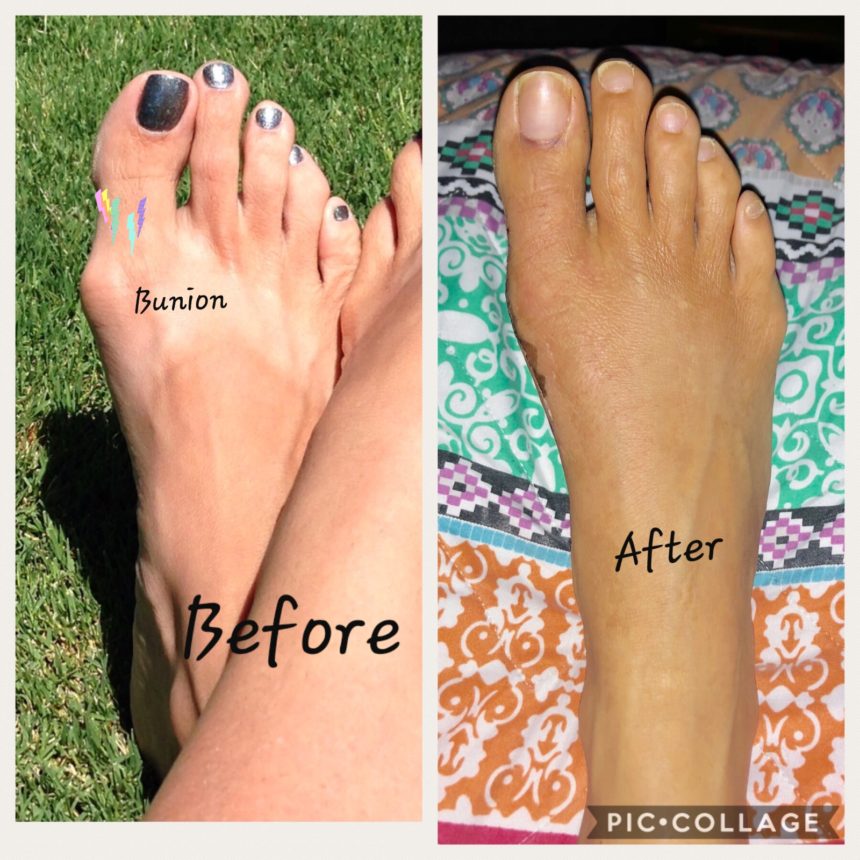
    Bunion surgery results before and after surgery
    Before and After Bunion Surgery

    Bunions are not pleasant to say the least. First you have the painful bump that bothers you after a day of walking around. Then there is the issue of finding proper fitting shoes. Lastly there are the mechanical issues including a stiff joint and over lapping or under lapping of the second toe. There are many treatment options available. Non surgical ones include wider shoes and anti inflammatory medications. There are times when one gets so frustrated with their bunions that surgery becomes necessary. Here at the Advanced Foot And Ankle Center of San Diego we use techniques that make the recovery very easy. Many procedures today allow for immediate weight bearing. So no more ” you need to be off your feet for 12 weeks”. Also we offer minimal incision approaches that there is virtually no visible scar. As you can see from the picture on the right there is no visible incision, the big toe is not riding on the second toe and lastly that pesky bump is gone. Using our advanced techniques we are able to minimize post operative pain, this is very exciting for patients that have had painful surgeries in the past. I have had many patients come in that have had bunion surgery elsewhere and wanted to have the other foot done at our center, time after time they have told me that the pain was much less at our institution.

    Hallux Varus
    Hallux Varus

    Very often I will have people that come in that have failed bunion surgeries from other institutions. The above picture is a from another surgeon that had a complication with her bunion surgery. The surgeon over corrected the bunion and created the varus deformity that you see in the picture. We experts in performing revisions of non unions and Hallux Varus complications. Many of my patients come to me with failed foot surgeries from elsewhere that need revision surgery.

    We also have 3-D bunion correction available. With the Lapiplasty procedure we are able to get the most accurate correction possible. This is a big breakthrough in bunion surgery.

    https://vimeo.com/199272477

    If you have a bunion and have been told that surgery will entail too long of a recovery or is too painful come in for an evaluation today.

  • Cartiva For Hallux Rigidus

    Cartiva For Hallux Rigidus

    Cartiva for Hallux Rigidus

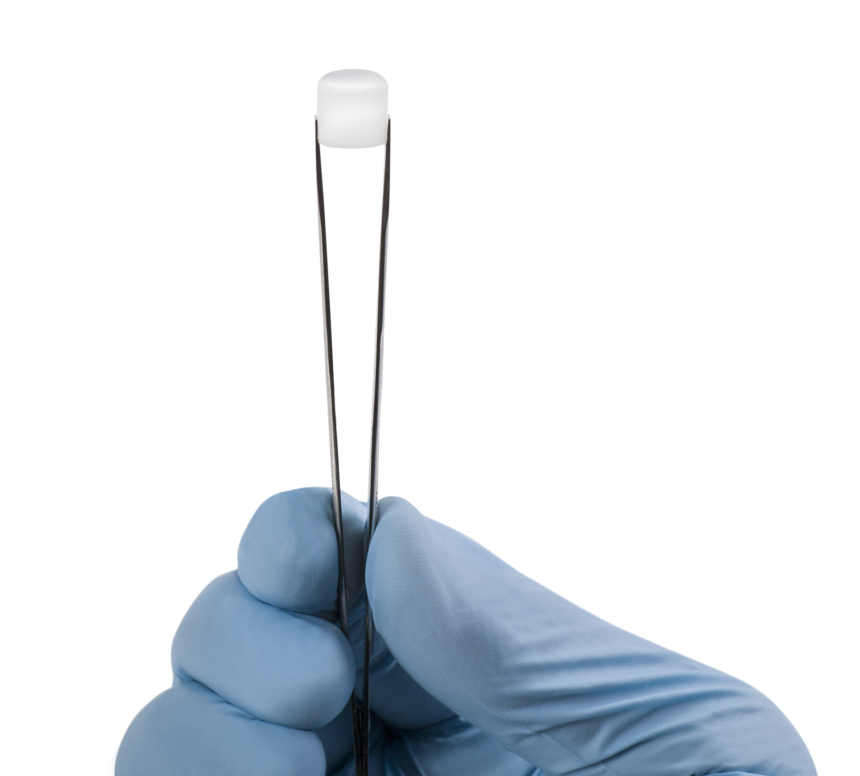
    Patients suffering with a stiff and painful big toe joint ( Hallux Limitus or Hallux Rigidus, Osteoarthritis of the big toe 1st MPJ)  now have a great option to get their life back. Cartiva is an implant that is changing how surgeons approach foot surgery. It is a joint sparing implant. That means unlike a fusion where one can not move the toe again cartiva allows for increased motion and no more pain. Cartiva is the only implant with level one studies showing increased motion , decreased pain and functional improvement. I have been using this implant in my practice and am amazed by the satisfaction of my patients. I have been doing Hallux limitus and hallux rigidus surgery for over 15 years. In my experience this implant when used for the proper indications is one of the best out on the market.

    Cartiva does not Burn Bridges

    The other implant solutions on the market have certain downsides. Most of them burn bridges. What i mean by that is if you fuse the toe then is does not move again- bridge burned. If you put in a metallic implant then you have to remove a lot of bone to get it in, if it fails and it needs to be removed your stuck with a short toe- bridge burned. Cheilectomies do not seem to accomplish much. I have hundreds of patients that come into my practice yearly that had a cheilectomy done and the pain came back within 9 months.

    Cartiva is the solution

    Cartiva is made of a organic polymer that mimics cartilage. You get back the missing motion. You can immediately weight bear on the toe after the surgery. once the incision heals you can get back into your shoes. For my patients the recovery time for cartiva is much faster than any other big toe surgery. It is a great option for treating osteoarthritis of the big toe.

    An x ray with a physical exam of the toe is always necessary to properly diagnose and to see if Cartiva is right for you . Make an appointment today

  • 3D Printed Surgical Implants For Charcot Foot Surgery

    3D Printed Surgical Implants For Charcot Foot Surgery

    3D Printed Surgical Implants For Charcot Foot Surgery

    3D Printed Surgical Implants For Charcot Foot Surgery

    Today with advances in technology we have the ability to perform surgical corrections of deformities like never in the past. With the advent of 3-D custom printed implants we can now correct deformities of the foot and ankle with accurate precision. Many deformities of the foot and ankle do not have the proper implants to correct the deformities because of the unusual nature of these issues. Particularly Charcot foot and ankle deformities. When performing surgical correction of the charcot foot the surgeon must be prepared in the operating room with many backup hardware fixation methods as the Charcot deformity can be very challenging to treat.

    Why 3-D implants for the foot?

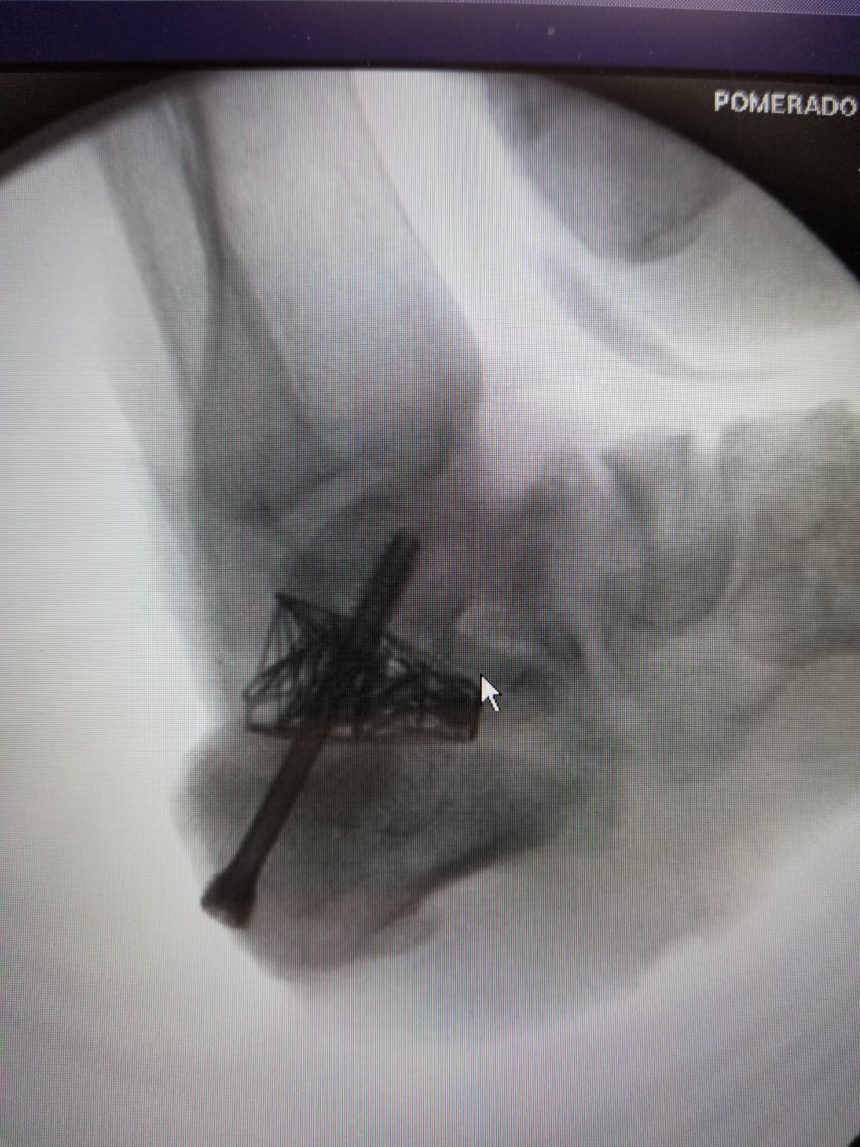
    Now with the advent of 3-D printing of surgical implants I can accurately plan out for an exact correction of the deformity and perform the surgery without any complications. As my practice focuses on limb salvage and charcot foot correction I have significant experience in all types of hardware for foot and ankle fixation. I have performed as to date the only 4 Web 3-D custom printed implants in San Diego California. First the patient is seen in the office and evaluated to see if they are candidates for the surgery. many times the patient will come to my office and be told by multiple surgeons that they need their foot amputated and that Dr Wrotslavsky specializes in amputation prevention. Next a CT scan is ordered and we create 3-D cad images to recreate the deformity digitally. Once that is done I have a special web based meeting with designers of the implant and we plan out the design . After that the implant is created and shipped for individual use. The future of surgery is here today with custom printed implants. Do not settle for an amputation come in today to see if you are a candidate for a custom 3-D printed implant.

    3-D Printed Surgical Implants For Charcot Foot Surgery

    4 Web 3-D printed implant
    3D Printed Surgical Implants For Charcot Foot Surgery
  • Achilles Tendon Rupture Repair

    Achilles Tendon Rupture Repair

    Achilles Tendon Rupture Repair

    Achilles Tendon Rupture Repair

    POP, you feel it in the back of your ankle. It can feel as if someone slugged you with a bat in the back of the heel. You fall down and can barley walk on the foot. Overnight the ankle and heel get swollen and purple. When walking you barley have any muscle strength to move your ankle up and down You end up getting evaluated and diagnosed with an Achilles tendon rupture. What next. The Achilles tendon is the strongest tendon in the body. It is the tendon responsible for pushing the foot down. For example walking up and down stairs and even getting up from a chair are crucial to have a working Achilles. There is evidence that shows to cast these injuries and let the tendon re attach by itself. However what you do not read about is the re-rupture rate after this method of healing. It has been reported that after casting torn Achilles tendons they can re rupture 20% of the time. Surgically repaired tendons show as low as 1% re rupture. Just a few weeks ago I had a patient that was casted elsewhere and not even 9 months later there was a full re rupture, he was so disappointing because he was immobilized for closed to 3 months with the old method.

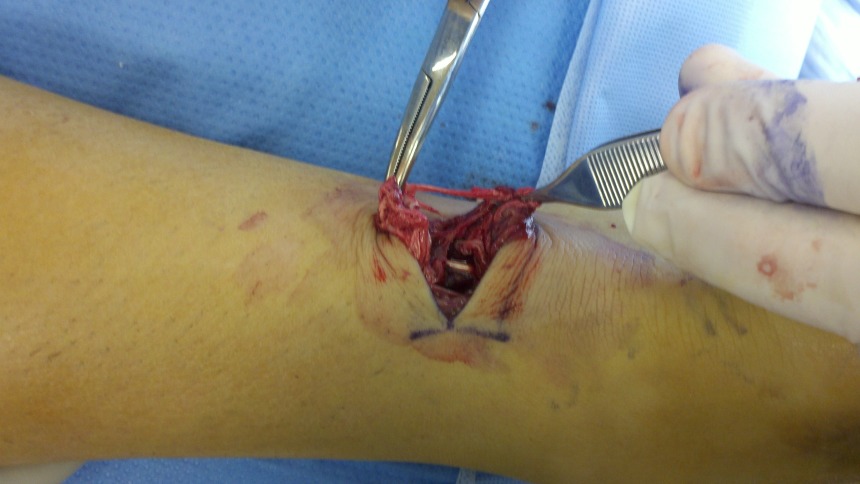
    The good news is that there is a new approach to Achilles surgeries, that has overtaken the old method with long incisions and lots of scarring.  This minimally invasive approach uses a calibrated jig that we pass the sutures through the skin and it locks down the Achilles and draws the 2 ripped sides together. This heals in a beautiful fashion with minimal scarring and faster return to activities. Having performed numerous Achilles repairs using both approaches, I can confidently say my patients are very happy with this approach and all have healed withing 4-6 weeks. With a 0% re rupture rate.

    Don’t leave your Achilles repair surgery up to chance, make sure you know your options as a patient that there are minimal invasive approaches to repair the tendon. And make sure your surgeon has performed many of them. Feel free to come in for an evaluation to see if this is the right procedure for you

    Dr Wrotslavsky is Board certified by the American Board of Foot and Ankle Surgery and completed a orthopedic fellowship in limb lengthening and reconstruction. He practices Foot and ankle surgery in San Diego with focus on sports medicine injuries , bunions , hammertoes, heel pain and Amputation prevention surgeries.

    Achilles Tendon Rupture Repair

  • Hyperbaric oxygen abuse

    Hyperbaric oxygen abuse

    Hyperbaric oxygen therapy has been criticized for being overused for increasing corporate profits.Now a new study came out revealing the dark side of hyperbarics. Unfortunately it can be an overused modality that does not have the patient’s best interest in mind. You have a wound and get a referral to a wound care center. The doctors there tell you you need 20 to 25 hyperbaric dives to heal your ulcer. Besides the underlying corporate greed you also need to be very aware of the potential physical hazards. https://www.ncbi.nlm.nih.gov/pmc/articles/PMC5467109/ The list of possible complications with hyperbarics treatment can be frightening. Collapsed lungs, ruptured eardrum, Sinus barotrauma, paranasal barotrauma, CNS toxicity, pulmonary toxicity, hyperoxic myopia, cataracts, nerve damage and claustrophobia are just to name a few. The article goes in depth as to all the possibilities as to what can go wrong. Too often hyperbarics is taking the place of proper wound care. I lecture around the country with other doctors and hear them constantly complaining how the patients that are getting hyperbarics are not getting proper surgical debridements. That the patients are not getting timely consult with plastics, vascular and podiatry. These fields are trained to close the wounds via skin grafts and flaps. It is common that patients getting hyperbarics are discouraged from getting VAC and negative pressure therapy. I recently heard this sentiment from a very respected

    Foot ulcer with gangrene
    Foot gangrene

    local plastic surgeon. What blows my mind is that there are thousands of peer reviewed published articles showing without a doubt negative pressure can close wounds months faster. With barely any good data supporting hyperbarics for wounds.

    Hyperbaric oxygen abuse

    At this point you may be asking how is this so. Here is hyperbarics dirty little secret. When you are prescribed hyperbarics by a wound care center more often than not they have a very big financial interest involved in getting you to do the treatment. There are some large wound care companies that will place the hyperbarics machines by the hospital and with creative contracting that give financial benefits to all involved. This financially will help the hospital and wound care center because medicare pays a large amount for a hyperbaric dive. On average you can spend 3 hours a day to get into the hyperbarics machine ( that includes getting to the facility getting onto the machine and getting home). Medicare has documented over use of this treatment. Studies have questioned its benefits. The American Diabetes Association has stated by its experts that there is not enough data to show that hyperbarics works for diabetic wounds.

    I am not saying that hyperbarics is not ever indicated. One should always get a second opinion from a plastic , vascular or podiatric surgeon if there as a way to close the wound quicker and more effectively.

    Hyperbaric oxygen abuse

    Here is the article published by kaiser health news  discussing the corporate interests in hyperbarics https://khn.org/news/hospitals-put-more-stock-in-hyperbaric-therapy-for-diabetics-despite-concerns/

    Here is one from the Washington Post https://www.washingtonpost.com/national/health-science/hyperbaric-wound-treatment-often-for-diabetics-is-booming-is-that-a-good-thing/2017/06/23/972d50a6-5065-11e7-be25-3a519335381c_story.html?utm_term=.936344b96662

  • Charcot Medial Column Fusion Surgery

    Charcot Medial Column Fusion Surgery

    Check out our latest you tube video on Charcot Medial Column Fusion Surgery


    Many of my patients come in being told by multiple doctors that they need their foot amputated. There are always techniques available to prevent amputation. Charcot Medial Column Fusion Surgery is one method employed in certain cases that allows for a foot reconstruction. And for one affected with Charcot foot the last thing someone wants to hear is that they need an amputation. Foot and ankle amputation rates are soaring in California, as well as San Diego has the highest rates of amputation. We strive to offer limb saving strategies. Our goal is no more amputations for the diabetic foot. Utilizing advanced imaging and deformity analysis, we develop plans and strategies to save the foot.

    Charcot Medial Column Fusion Surgery

    The key is our team approach with vascular and infectious disease and the patients diabetic doctors. Dr Wrotslavsky Lectures to other doctors around the world teaching others his techniques that he has designed in order to save legs at risk. If you have a diabetic foot ulcer or maybe you were told you needed an amputation come in for an evaluation. I always encourage my patients to get a second opinion. Recently I had a patient in the hospital and he was recommended an amputation by a surgeon that admittedly did not understand the complexities of the diabetic foot. The patient stood his ground and refused and still has his foot with a healed wound.

    The Charcot Medial Column Fusion Surgery is a great way to realign the severe deformity that usually happens when the foot collapses. It gives excellent structural support and allows one to start walking again in supportive shoes. So stop procrastinating and come in to get evaluated to see if this procedure is the right one for you.