Advanced Foot and Ankle Center of San Diego

Category: Diabetic Foot

  • Healthy Feet, Independent Life: Specialized Foot Care for Seniors in La Jolla

    Absolutely, Phil. Here’s the revised blog with the additional La Jolla independent living communities—Pacific Regent La Jolla, Atria La Jolla, and Bayshire Torrey Pines—included for a more comprehensive and locally targeted message:


    Title: 

    As we age, maintaining mobility becomes essential for independence, confidence, and quality of life. At Advanced Foot and Ankle Center of San Diego, we proudly offer expert foot and ankle care to seniors living in independent retirement communities throughout La Jolla, helping you stay on your feet—comfortably and safely.

    Whether you’re living at White Sands La Jolla, Casa de Mañana, Vi at La Jolla Village, Belmont Village Senior Living, Pacific Regent La Jolla, Atria La Jolla, or Bayshire Torrey Pines, our board-certified specialists are here to support your foot health with compassion, experience, and the most advanced treatment options available.


    Why Foot Care Matters More as We Age

    Our feet carry us for a lifetime, but over time, common conditions like arthritis, bunions, hammertoes, corns, calluses, neuropathy, and fungal infections can make walking painful and risky. Diabetes, circulatory issues, and balance changes further increase the chance of complications from untreated foot problems.

    Routine podiatric care can help prevent small issues from becoming serious mobility threats. That’s why our clinic emphasizes regular checkups, safe toenail trimming, skin care, and treatment of foot pain, all tailored to the unique needs of older adults.


    Services We Offer

    At the Advanced Foot and Ankle Center of San Diego, we provide a full spectrum of services, including:

    • Diabetic foot exams and wound prevention
    • Toenail care for thickened, fungal, or ingrown nails
    • Callus and corn management
    • Arthritis and joint pain treatment
    • Fall risk assessment and balance support
    • Custom orthotics and offloading shoes
    • Minimally invasive procedures when needed
    • Home care recommendations to keep you active and safe

    Our office is centrally located and easily accessible for La Jolla seniors. We’re also happy to coordinate with your primary care provider or family members to ensure continuity of care.


    Proudly Serving La Jolla’s Senior Communities

    We regularly care for patients from:

    • White Sands La Jolla – a premier oceanfront senior living community
    • Casa de Mañana – known for its charming historic setting and active lifestyle
    • Vi at La Jolla Village – luxury retirement living near UCSD
    • Belmont Village La Jolla – offering exceptional hospitality and care
    • Pacific Regent La Jolla – a vibrant high-rise independent living community
    • Atria La Jolla – known for its warm atmosphere and personalized care
    • Bayshire Torrey Pines – offering comfortable, supportive senior living in a serene setting

    If you live in any of these communities—or are a loved one helping someone who does—know that our practice welcomes new patients and offers individualized, respectful care that prioritizes comfort and safety.


    You Deserve Expert Foot Care

    Led by Dr. Philip Wrotslavsky, a double board-certified foot and ankle surgeon with advanced training in limb salvage and reconstruction, our team understands how to keep seniors active, independent, and pain-free. With over 20 years of experience caring for older adults, we recognize that good foot care is good health care.

    Don’t wait until pain or infection forces you to stop doing what you love. Contact Advanced Foot and Ankle Center of San Diego today to schedule an appointment and step into a more comfortable tomorrow.

     

  • Foot Infection Antibiotic discussion Kimyrsa

    Next up is KIMYRSA. KIMYRSA is a new IV antibiotic with similar uses as Dalvance: treating acute bacterial skin and skin structure infections with antibacterial properties against a similar spectrum of aerobic Gram-positive bacteria. It is the second generation of this specific antibiotic, the first being Orbactiv. It is from the same family of antibiotics as Vancomycin , however it has a significantly better safety profile and does not require and IV hanging out of your arm/

    Why I Like it:

    1. Three Mechanisms of Action vs One: KIMYRSA is a lipoglycopeptide that acts in 3 different ways to kill bacteria. For those of you who are interested in more specifics, here is a video off their website that explains it.
    2. 1 Dose for 14 days of treatment: Like Dalvance, KIMYRSA also requires only 1 dose for 14 days of treatment. The benefits of which I discuss in the previous post (hyperlink to Dalvance post).
    3. Minimal Risk to Kidneys: One of the risks of long-term antibiotics, especially in cases of chronic/recurring infection and complex systemic infections with multiple sources where multiple antibiotics or rounds of antibiotics are required, is developing acute kidney injury (AKI). However, from the research that has been performed to date, KIMYRSA is not metabolized in the liver or kidneys but is instead excreted unchanged in urine and feces over time. As such, it does not need to be dose adjusted for renal impairment because it does not involve the kidneys at all, minimizing risk of developing AKI with use. In at risk patients or patients with chronic kidney disease, this is a very promising option.

    As I discussed in a previous post, antibiotics are complicated. Not every antibiotic is ideal for every patient’s particular circumstances. But, for the right patient, I’m excited about KIMYRSA and what it can offer for treatment for patients.

    *I have no financial interest in Melinta Therapeutics

    Written by Dr. Gavin Tsuchida

    Dr. Tsuchida recently moved to San Diego from New York and is enjoying the beach and hiking when he’s not providing thoughtful, personalized care for his patients.

  • Foot infection Antibiotic Highlight: Part I – Dalvance

    I wanted to discuss a few newer antibiotics that we’ve been using at Advanced Foot and Ankle Center of San Diego that we’re excited about. This is not intended to be extensive reviews of the pros and cons of each antibiotic but rather an introduction to and highlighting of the unique benefits they bring to patients. The first, is Dalvance.

    Dalvance, or Dalbavancin, is a lipoglycopeptide that prevents cross-linking and thereby interferes with cell wall synthesis. It has been shown to be effective against aerobic Gram-positive bacteria which are commonly seen in diabetic foot wounds and post-op surgical site infections. Currently it is indicated for use in treating acute bacterial skin and skin structure infections. It has also been used more recently in my experience for osteomyelitis (off label use).

    Why I Like It: 1 Dose for 14 days of treatment

    Dalvance’s largest advantage is that it only requires one dose. It is an IV antibiotic that stays in the blood at an appropriate concentration to work against bacteria for at least 14 days. This greatly simplifies treatment for a patient from a logistical standpoint while still providing optimal treatment.

    Time is Precious!!

    IV antibiotics have 3 different ways it can be administered. Via home infusion (requires health aide or family member to administer), daily appointment at infusion center, or staying at an outpatient facility for treatment. Regardless of the method, there is a significant intrusion into daily life of both the patient and their loved ones. Time is required for infusion (can be up to 1 hour) and certain antibiotics can require administration up to 3 times a day. If you need to travel to an infusion center every day, that requires transportation time on top of the infusion time. Dalvance eliminates this as it requires only one 30min infusion that lasts for ~2 weeks which vastly reduces time and opportunity cost for patients while still delivering optimal treatment.

    Of course, Dalvance cannot be prescribed for everyone. There are different factors that would make other antibiotics better for a patient. However, for patients that need an IV antibiotic for treatment of an infected diabetic wound or post-op surgical infection, I have found Dalvance to be a great option that gets good results without significantly impairing daily activity.

    *I have no financial interest in Allergan Pharmaceuticals International or the parent company Abbvie Medical or Dalvance as a product

    Written by Dr. Gavin Tsuchida

    Dr. Tsuchida recently moved to San Diego from New York and is enjoying the beach and hiking when he’s not providing thoughtful, personalized care for his patients.

  • Diabetic Toe Wounds

    Diabetic Toe Wounds

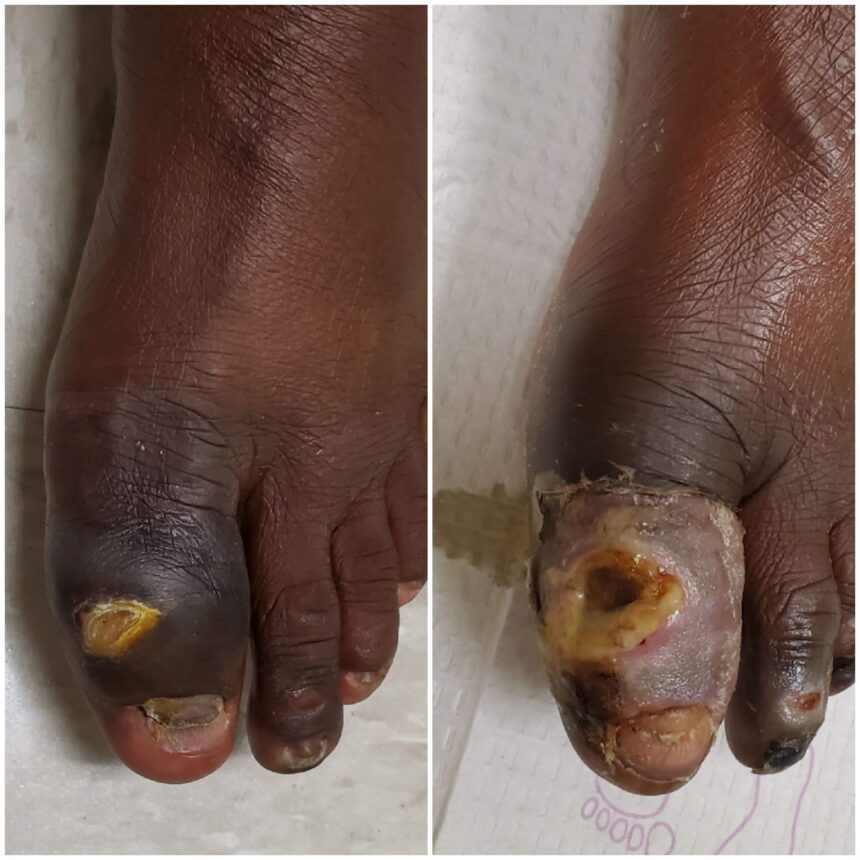
    Not all wounds of the foot need surgery. Too often doctors can be pre-programmed to tell a patient when faced with a difficult diabetic toe wound, to just amputate the toe. Amputation many times is the best solution, but not always.

    Diabetic toe wound
    before and after diabetic toe wound

    As can be seen in the picture above, the toe on the right is the initial presentation of the patient , the one on the left is a little then 2 months later.

    The above patient presented with a deep penetrating diabetic toe wound and was at high risk for loss of a toe. X rays were positive for bone infection.

    infected bone
    infected bone

    Not all toes that are infected, even if the bone is infected, need amputation. This is a great case of no surgery needed. 6 Weeks IV antibiotics was all that was needed to get rid of the infection.

    resolving infection
    resolving infection

    This case is a great example of not rushing to surgery, and utilizing a team approach of Vascular and Infectious disease specialists to prevent amputation.

  • Charcot Foot And Ankle Reconstruction

    I was recently asked to give a lecture on Charcot foot and ankle reconstruction and thought that this was an opportune time to write a blog about the new updates and treatments regarding Charcot foot and ankle reconstruction.

    Charcot right foot and ankle reconstruction has undergone many types of treatment options over the past 100 years.  We have moved far past needing to amputate patients that are affected with Charcot neuroarthropathy, as the first line of treatment.  Most of the patients today can do well with reconstruction techniques that allow them to go back into her shoe or to be in a boot.

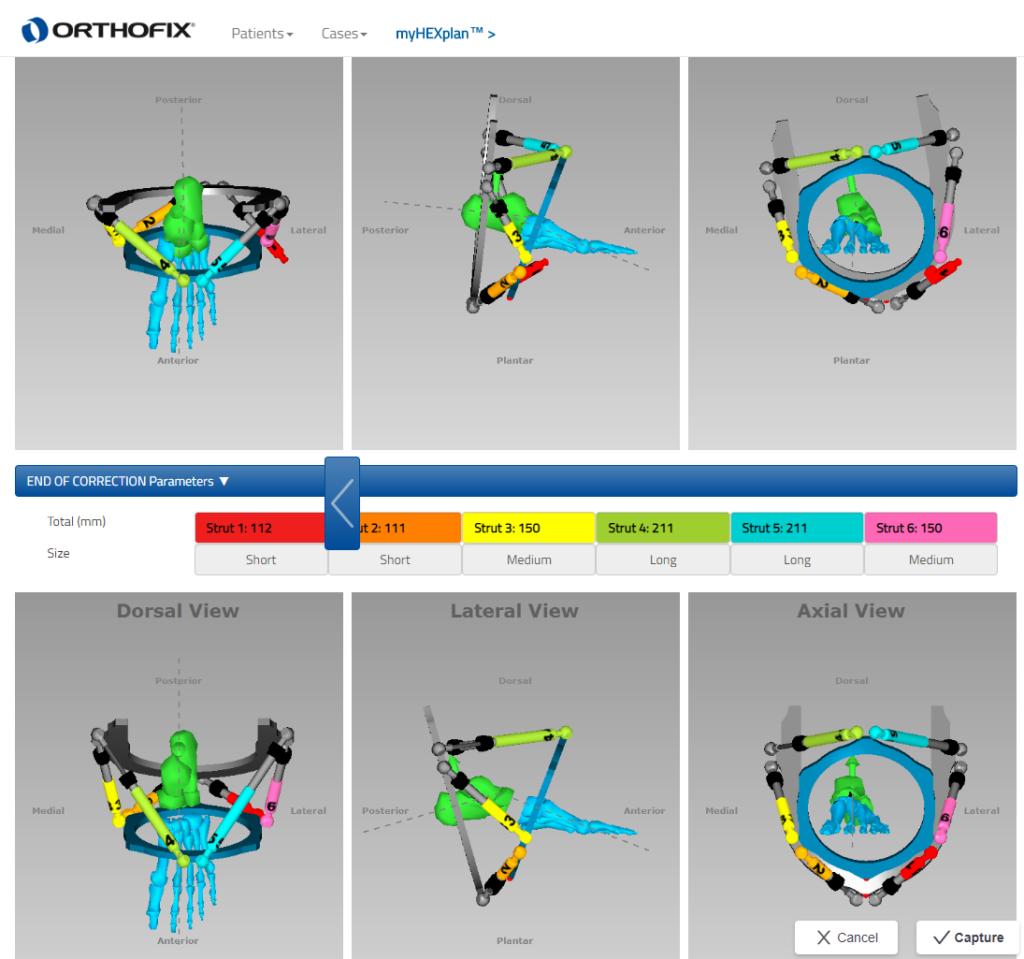
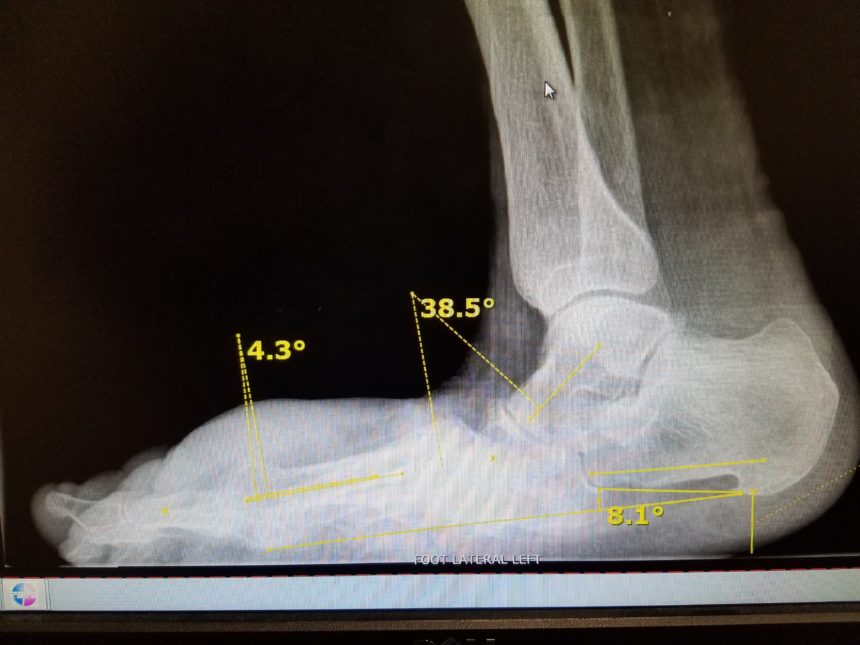
    With regard to Charcot foot reconstruction, many advancements have been made in deformity analysis and deformity correction techniques that allow for minimal removal of bone and minimal removal of soft tissue that also allow for maintaining the length of the foot.  We used various computer deformity programs that allow us to accurately measure how much bone needs to be removed as well as the precise area of where to make the bone cuts when necessary to reposition the bone after the collapse of a Charcot foot or ankle.

    1 of the big advances that we have been able to make with Charcot reconstruction is the beaming technique.  Intramedullary beaming of the foot and the ankle allow for a stable structure that makes it easier for the bones to heal.  As opposed to in the past when big incisions were made with the application of plates with multiple screws the beams have better strength and from a mechanical standpoint hold a better than plates and screws.  Due to the fact that people with Charcot have weakened bones, you will notice that many people Charcot have external fixators applied. Those external fixators are very important in allowing for the beaming procedures to be successful as it prevents 1 from moving the leg around or putting too much weight on their leg while the beams are working.  Some people have very large deformities that require a technical gradual deformity correction.  Gradual deformity correction is very similar to when 1 has braces for teeth.  If one will go to an orthodontist on the orthodontist would say to them,  that they were going to take your teeth and crank them into the right spot you get pretty nervous and run out of the office.  What you may have expected to hear their input on braces that slowly take the teeth and put them back in the right position.  Similar is with the foot and ankle there are many deformities that you cannot put back into the right position and 1 shot and requires a two-stage procedure.  That is why you see some of these external fixators with rods next to them that the little rod used to turn very slowly and will slowly correct the foot in the right position. One of the big advancements that we have now with deformity correction are computerized programs that allow us to take exact measurements of where the bones are where the deformity is and we are exactly to make the bone cuts so that the healing is done in the most optimal fashion.

    Computer assisted Charcot reconstruction
    computer-assisted deformity correction.

    Some of the updates that we find with ankle Charcot are similar to foot Charcot in the sense that the combination of rodding and external fixation is vital for recovery.  This comes from the same idea that since the bones are very weakened with Charcot just putting in a plate with some screws is destined for failure.  Most cases of ankle Charcot require an intramedullary rodding to hold it in place with an external fixator on top of that.  Once the healing is complete and the external fixator can take it off and then you have the rod left and there.  Most people with ankle Charcot end up doing better with this technique.  Up until the last few years when this technique became more excepted many people had failures of ankle reconstruction secondary to Charcot surgery because this was not to the excepted technique.  Now that this is the excepted technique we have gone from a 50% success rate to over 90% success rate.

    Lastly, there are many other tricks and techniques that we have found that works very well with making sure the skin heals properly.  There have been some great advancements and negative pressure therapy on incisions to help the incisions heal faster.  Utilizing all of these techniques we were able to help people with Charcot foot and ankle get back to the regular activities.  And at least prevent many amputations that are unnecessary because of these new techniques.

  • Predicting the severity of diabetic foot infections

    When one presents with a diabetic foot infection there is always the fear of amputation.  Diabetics that have infections in their feet are at significantly increased risk for amputation.  The challenge is to make sure that the patient can be treated with his minimal amount of surgery as possible saving as much of the leg as possible.

    Over the years research has been done in the field of predicting the severity of infection to see if there is a correlation with any markers in the blood or diagnostic studies that can tell us how bad the infection is.  The studies can help us understand whether one needs surgery versus being able to treat with intravenous antibiotics.  Usually, x-rays or an MRI or bone scan will tell us where the infection is to the extent of how far deep into the foot or up the leg the infection goes.  There have been studies as to what markers in the blood he can tell us the severity of the infection.  The first thing that we look at is one is white blood cell count as that is the primary marker to see if your body is fighting infection by producing white blood cells to fight the infection.  There are other studies such as ESR and CRP that can tell us the severity of the infection.

    Recently there has been published research into a marker in the blood called procalcitonin.  Procalcitonin is the peptide precursor of the hormone calcitonin.  It usually is elevated when there is an inflammatory stimulus from a bacterial infection.  A recent study that was published in the Journal of diabetes research showed that increased procalcitonin levels at the time of admission to the hospital were a high indicator of amputation.  This is a very important study for doctors and patients alike as when one presents with an infected diabetic foot amongst all the many tests that need to be performed procalcitonin levels are very useful in helping the doctor and the patient be able to predict the proper treatment.

    foot ulcer
    foot wound

    This new data helps us create a better treatment plan with diabetics that have infections in the foot.  Instead of waiting around for surgery or debridements, when this data is available more definitive treatment can be offered to the patient and prevent amputations.  No one ever wants an amputation but given the choice of amputating a toe versus the whole leg, it seems obvious that one would rather lose the toe.  With the information available from the procalcitonin test that can be the difference between losing the toe or leg.

  • TrueLok Masters Club

    TrueLok Masters Club Boston July 2017

    Trulok Masters Club update

    It was an amazing weekend of top notch education at the truelok masters club in Boston. I am continued to be amazed that a corporate sponsored event can give a higher level of education than many CME events available. It began on a solemn note with a dedication to Dr Scott Denisar. Dr Denisar passed away at a young age of 39. He was dedicated to the field of foot and ankle surgery. As well as education in treatment of various foot and ankle diseases. A beautiful plaque was presented by Scott Day of Orthofix in memory of Dr Denisar. It is a breath of fresh air to see the human side of a corporation and how Orthofix went the extra mile to keep Dr Denisar’s memory alive. Kudos to Scott Day and the whole Orthofix team.

    The Masters club  focused this time on surgical complications. There was much learned and some great heated discussions as to how to scientifically define and manage complications. A big hand of applause to all the surgeons who had the courage to present their difficult complications. We all learnt from each others mistakes so that we do not have to repeat them.  Charcot foot and ankle continues to take a front and center stage in these conferences as well as plastic surgery approaches to the disease with the use of flaps and frames.  There was an excellent sprinkling in of pediatric surgery . With a great discussion on bone regenerate issues. External fixation still is the accepted best treatment for most charcot foot and ankle cases. However one must realize that charcot foot is a different biological process than Charcot ankle. Beaming of the foot is the future of correcting charcot foot. As well there are some new nano metals and cages that are coming into play that can have significant impact in treating charcot foot and ankle.

    Looking forward to the next Truelok Masters club in San Francisco, with a focus on deformity analysis and correction.

  • San Diego Charcot Foot Testimonial

    San Diego Charcot Foot Testimonial

    San Diego Charcot Foot Testimonial

    San Diego Charcot Foot Testimonial San Diego Charcot Foot Testimonial 

    San Diego Charcot Foot Testimonial

    Treating diabetics is one of the primary issues that Dr Wrotslavsky performs at the Advanced Foot And Ankle Center of San Diego. One of the challenges with diabetics is the condition called charcot foot. Dr Wrotslavsky has been successfully treating charcot foot and ankle for over 15 years. He lectures around the United States on Diabetic Charcot foot. Dr Wrotslavsky has developed many techniques that has led to saving many feet of patients that have been told they will need their leg amputated. Charcot Neuroarthropathy is a devastating disease that if not treated properly can lead to loss of leg and even unfortunately loss of life. One can see from the real patient testimonies that Dr Wrotslavsky has an excellent record of treating the diabetic foot and the charcot foot.

    Pre surgery Charcot foot

    The Charcot foot is a condition where the bones of the foot start to lose its integrity. As well as the ligaments in the foot will not hold up the boney structure anymore. This is a complex metabolic process that scientists and doctors have not been able to come up with a solution on how to prevent it. As well there is no current solution on how to stop the process on a cellular level once the charcot foot or charcot ankle process begins. Once this happens the foot can become very deformed. These deformities can lead to ulcers and infections of the foot. Once the bone gets infected (osteomyilitis of the foot) then it can lead to amputation of the foot. Dr Wrotslavsky employs a method of correction of these deformities as well as many other deformities of the foot ankle and leg that can re align the foot ankle and leg in the proper position.

    Take a look at the videos above of patients of Dr Wrotslavsky. These are actual people that have been told they need amputations of their legs and after treatment are walking with their own two feet.