Subconsciously most people know that their good health is their most important asset, and one worthy of keeping through care and attention. In practice, however, healthy people tend to take their good health for granted – until they receive a diagnosis of a chronic condition that reverberates like a punch to the gut. Many chronic conditions can be managed through lifestyle and diet changes, such as avoiding gluten if you’ve been diagnosed with celiac disease. Others require more careful planning and management.
It’s important, too, to understand how such a diagnosis can impact your health in other, seemingly unrelated ways. For example, diabetes can lead to certain foot issues, like those seen and treated at Foot Doctor San Diego. It’s also not uncommon for people with a chronic diagnosis to feel so overwhelmed and sad that it can lead to mental health disorders like depression. Early and practical action can help people cope with their diagnosis by making adjustments that allow them to retain many of the activities they enjoy.
Don’t be a passive host to your condition
Taking action is the best thing you can do following your chronic condition diagnosis. It may take you a few days or even weeks to absorb what you heard and what the future may hold, but once you’ve regained your composure, don’t concede an early defeat by doing nothing! Getting started earlier can make you feel better both physically and emotionally.
Set a plan to help you remember to take any medications. Ask your family to participate in some of the lifestyle changes you’re making, such as eating and exercising, to both motivate you and keep you emotionally connected. Together you can create meal plans to keep you on track with healthy eating; if you need assistance, ask your medical team for a referral to a dietitian. Ask your treating physician for approved physical exercise activities. Keep a daily journal of how you feel, and any symptoms – you may feel like you are relying heavily on your doctor, but in reality, you’re the CEO of your health, and your doctor needs to rely on you to stay on top of how you are feeling.
Plan for the future
Your diagnosis may have your mind going to end-of-life considerations, such as creating a living will. Those are activities that everyone should complete, regardless of health, so if that crosses items off your to-do list, then do them. But you should also plan for your short-term needs. Even if they aren’t significant, you will have less to worry about and deal with later when you want to devote your time to pleasurable things and not tasks.
For example, will your diagnosis negatively impact your future mobility? In addition to foot problems that diabetic patients can encounter, such as diabetic neuropathy and claw toe, other chronic conditions can also affect your feet and thus, your mobility. Arthritis can cause foot pain and conditions such as bone spurs. Osteoporosis can weaken your bones and lead to foot fractures. Even chronic and serious bunions can cause mobility and balance issues, making it difficult to navigate stairs and walk long distances.
Where you live can be important to how you live
Taking into account any current or future mobility issues, assess whether your current living environment is adequate, or even if it can aggravate your symptoms or condition. Consider moving into a more accessible home, such as from a two-story to a one-story. Get a jump on successfully securing the perfect home when you find it by checking your credit report, assessing your income and expenses to see how much home you can afford, and getting pre-approved for a home mortgage. Armed with that information, you can scour online sites and find a real estate agent to help you find the right home in the right neighborhood.
Once you’ve found a home, you can make your life easier by hiring a professional moving service to take care of some or all of your moving needs. Research local movers on Angi to discuss exactly what you need and to get a quote. Before calling, look at their online reviews to screen out potential problems. Once you get your verbal quote over the phone, ask them to send it in a written estimate; if they’re legitimate, they won’t put a firm quote in writing without coming to your home to personally evaluate the scope of the job and then formulate the cost.
Health redefined
Living with a chronic condition requires some adjustments. By taking early action and tangible steps to make those adjustments, you’re redefining and adapting to what “healthy” now means for you. Getting on with your life, and getting the most out of it both physically and mentally, is the most important thing. Keep listening to your body and loop those conversations back into your continued care.
Find additional helpful articles like this on Foot Doctor San Diego / La Jolla Podiatrist
Blog
-
Chronic Care: Living Fully With a Chronic Health Condition
-
Cartiva Implant Success For Hallux Rigidus
Many times prospective patients wonder ” I read about this procedure, but does it really work? Cartiva for Hallux Rigidus and Hallux Limitus not only works great but the long-term outcomes on it have been very very impressive. I continue to have patients that come in having done this procedure for Hallux rigidus and hallux limitus that are a few years out and they are singing its praises. Below is an email from one of my happy patients that gave me permission to post what he spontaneously wrote to me. He describes the long-term outcomes and benefits he has received with Cartiva for Hallux Rigidus.

Hello Dr, Phil,
Was working around the yard yesterday digging holes..repairing my sprinkler system. I realized my big toe on my right foot was not bothered at all with the activity. Got me thinking that it will be three years in August since the surgery. I remember that prior to the surgery, just the weight of a blanket in bed was painful! Now I never think of it.
Too often we take successful surgery for granted and neglect to thank the person responsible.
Thanks so much for recommending and performing the surgery that gave me my active life back.
So far, so good, on the left foot but won’t hesitate if it starts acting up to reach out again.
Again, thanks so much and keep up the good work.
Regards,
Rick
-
Chronic Pain of the Foot and Ankle
Suffering from chronic pain of the foot and ankle requires a multimodality approach. One can get chronic pain in the foot and ankle for many reasons such as CRPS otherwise known as complex regional pain syndrome, or after trauma or multiple fractures, and also after surgeries 1 can develop chronic foot and ankle pain. With our increased knowledge in pain management therapies is imperative that we think beyond just the opioid treatments. Is well-known that opioid treatments with medications such as Percocet and oxycodone can have addictive properties as well as issues with sleep and also when one becomes dependent on these medications the efficacy wears off. It is important to realize that there are other treatments besides pharmacological treatments and taking pills.
Over the last few years, there have been introduced to the market as a method of pain management the concept of implantable nerve stimulators. These were devices that were originally approved for implantation in the back by the spinal column in order to address the pain at the level of the nerve where is exiting the spinal Column. The name of this treatment is called peripheral nerve stimulation otherwise known as PNS. The idea of peripheral nerve stimulation has been around since the 1960s, it was in 2012 that there were a number of devices that were introduced to the market that were just approved for spinal implantation. Currently, there is available on the market a product by stim wave that can be implanted around the nerves of the foot without the need to implant a battery into the foot. The way this works is that a very small tiny wire is implanted under the skin next to the nerve that is affected and causing the pain. The way that you get the pain relief is once the small wire that is implanted under the skin is inserted, it becomes activated by an outside activation source that you as the patient can control. This electrical signal will block the pain messages that are getting sent to the brain from the nerve. You may feel a small tingling sensation that over time will block the pain and overtime reduce the pain to the point where you will not need to be dependent on pain medications. This is done as a trial prior to permanent implantation. The trial is run for a week and if you do well with it then there can be a permanent implantation done at that time. The way this works on a nerve level is the year is an electrode that delivers rapid electrical pulses to the nerve which is actually controlled by the patient to the level that the patient likes in order to get the results that they are looking for. This is not a TENS unit it works in a very different way TENS units are applied onto the skin this is applied right against the nerve. As well it uses a different electrical pulse in order to help relieve the nerve. The main indication is for treatment of chronic pain. Types of chronic pain in the foot can be from posttraumatic pain, pain from multiple surgeries, complex regional pain syndrome, and diabetic peripheral neuropathy. However, it is not just limited to the symptoms but these are the most common symptoms.
Stimwave’s StimQ Peripheral Nerve Stimulator System (PNS) utilizes the same technology as the Freedom SCS System. A neurostimulator with electrodes and a receiver to utilize wireless RF power is placed near a peripheral nerve in your body, below the head, to treat your chronic pain. Fitting through a needle-sized incision allows for placement with minimally invasive surgery, typically as an outpatient procedure. Once implanted you CAN go into an MRI machine if needed for something else.
Before the device is implanted permanently, there is typically a trial period to determine if the therapy is effective for your chronic pain. PNS is covered by most insurance plans.
If you are interested in looking for an option that can help you with pain control for chronic foot and ankle pain consider the Stimwave’s StimQ Peripheral Nerve Stimulator System. We offer this treatment at the Advanced Foot and Ankle Center of San Diego. Make an appointment today to help ease your foot and ankle pain.
-
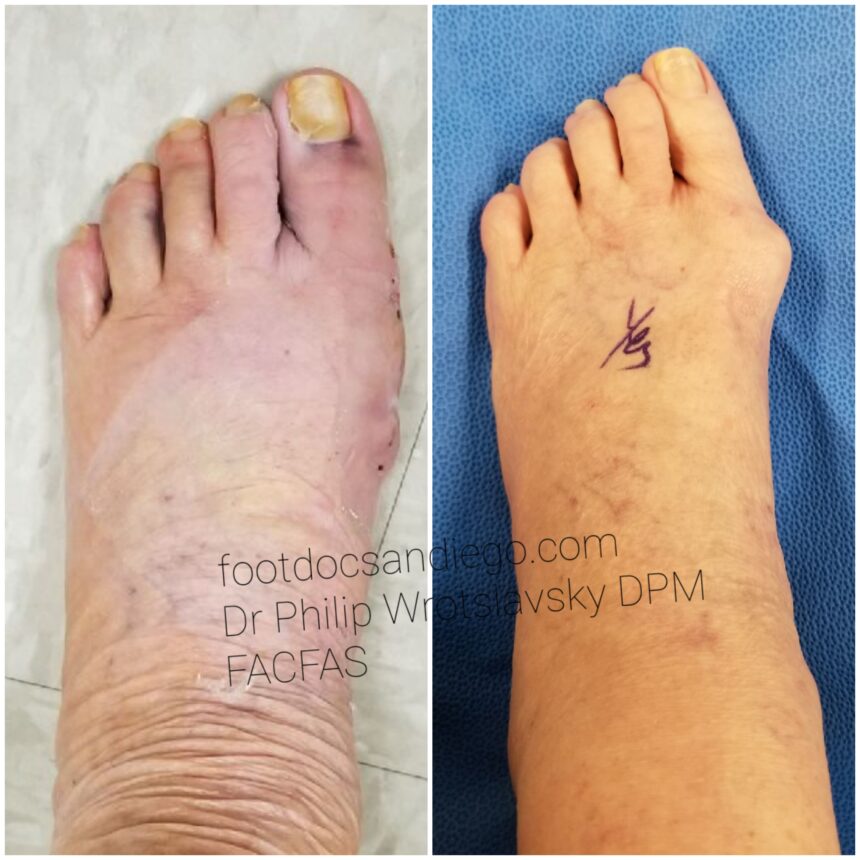
Before and After Bunion surgery correction pictures
Are you considering bunion surgery? We just wanted to share with you some before and after pictures.

Bunion Surgery 
Bottom is before top is after this was done on both feet 
Before and after bunionectomy We use a technique that has no visible incision and has one of the fastest recovery times. Cosmetically pleasing results with no long term non weight bearing.
Bunion surgery ,bunionectomy, hallux valgus, bump on the big toe, hallux abducto valgus
-
Diabetic Toe Wounds
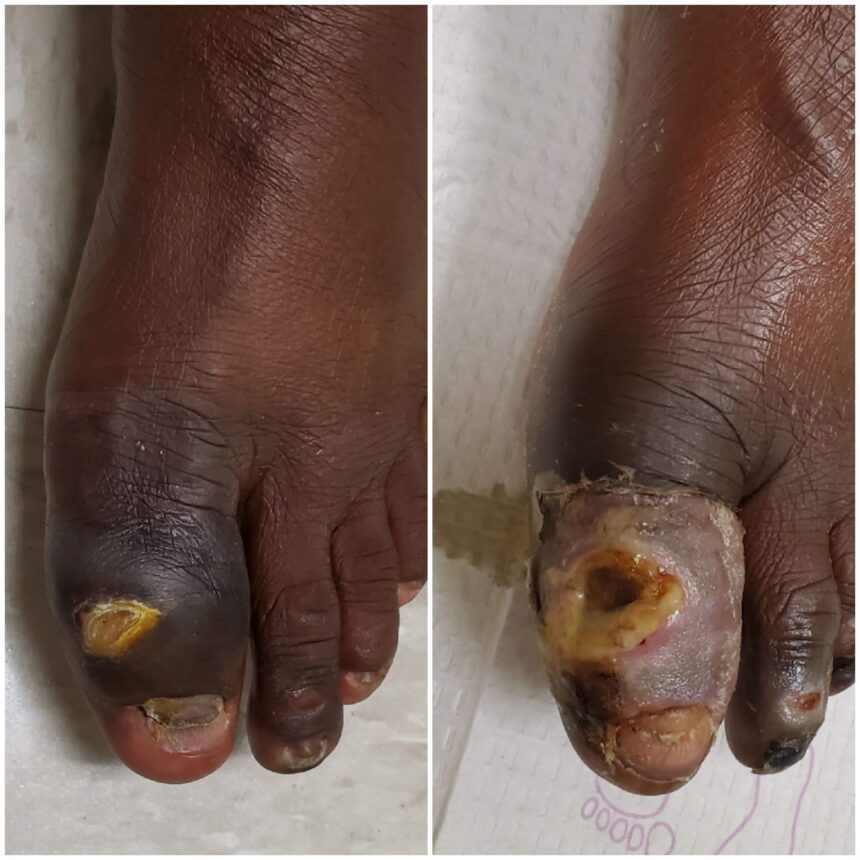
Not all wounds of the foot need surgery. Too often doctors can be pre-programmed to tell a patient when faced with a difficult diabetic toe wound, to just amputate the toe. Amputation many times is the best solution, but not always.

before and after diabetic toe wound As can be seen in the picture above, the toe on the right is the initial presentation of the patient , the one on the left is a little then 2 months later.
The above patient presented with a deep penetrating diabetic toe wound and was at high risk for loss of a toe. X rays were positive for bone infection.

infected bone Not all toes that are infected, even if the bone is infected, need amputation. This is a great case of no surgery needed. 6 Weeks IV antibiotics was all that was needed to get rid of the infection.

resolving infection This case is a great example of not rushing to surgery, and utilizing a team approach of Vascular and Infectious disease specialists to prevent amputation.
-
Charcot Foot And Ankle Reconstruction
I was recently asked to give a lecture on Charcot foot and ankle reconstruction and thought that this was an opportune time to write a blog about the new updates and treatments regarding Charcot foot and ankle reconstruction.
Charcot right foot and ankle reconstruction has undergone many types of treatment options over the past 100 years. We have moved far past needing to amputate patients that are affected with Charcot neuroarthropathy, as the first line of treatment. Most of the patients today can do well with reconstruction techniques that allow them to go back into her shoe or to be in a boot.
With regard to Charcot foot reconstruction, many advancements have been made in deformity analysis and deformity correction techniques that allow for minimal removal of bone and minimal removal of soft tissue that also allow for maintaining the length of the foot. We used various computer deformity programs that allow us to accurately measure how much bone needs to be removed as well as the precise area of where to make the bone cuts when necessary to reposition the bone after the collapse of a Charcot foot or ankle.
1 of the big advances that we have been able to make with Charcot reconstruction is the beaming technique. Intramedullary beaming of the foot and the ankle allow for a stable structure that makes it easier for the bones to heal. As opposed to in the past when big incisions were made with the application of plates with multiple screws the beams have better strength and from a mechanical standpoint hold a better than plates and screws. Due to the fact that people with Charcot have weakened bones, you will notice that many people Charcot have external fixators applied. Those external fixators are very important in allowing for the beaming procedures to be successful as it prevents 1 from moving the leg around or putting too much weight on their leg while the beams are working. Some people have very large deformities that require a technical gradual deformity correction. Gradual deformity correction is very similar to when 1 has braces for teeth. If one will go to an orthodontist on the orthodontist would say to them, that they were going to take your teeth and crank them into the right spot you get pretty nervous and run out of the office. What you may have expected to hear their input on braces that slowly take the teeth and put them back in the right position. Similar is with the foot and ankle there are many deformities that you cannot put back into the right position and 1 shot and requires a two-stage procedure. That is why you see some of these external fixators with rods next to them that the little rod used to turn very slowly and will slowly correct the foot in the right position. One of the big advancements that we have now with deformity correction are computerized programs that allow us to take exact measurements of where the bones are where the deformity is and we are exactly to make the bone cuts so that the healing is done in the most optimal fashion.
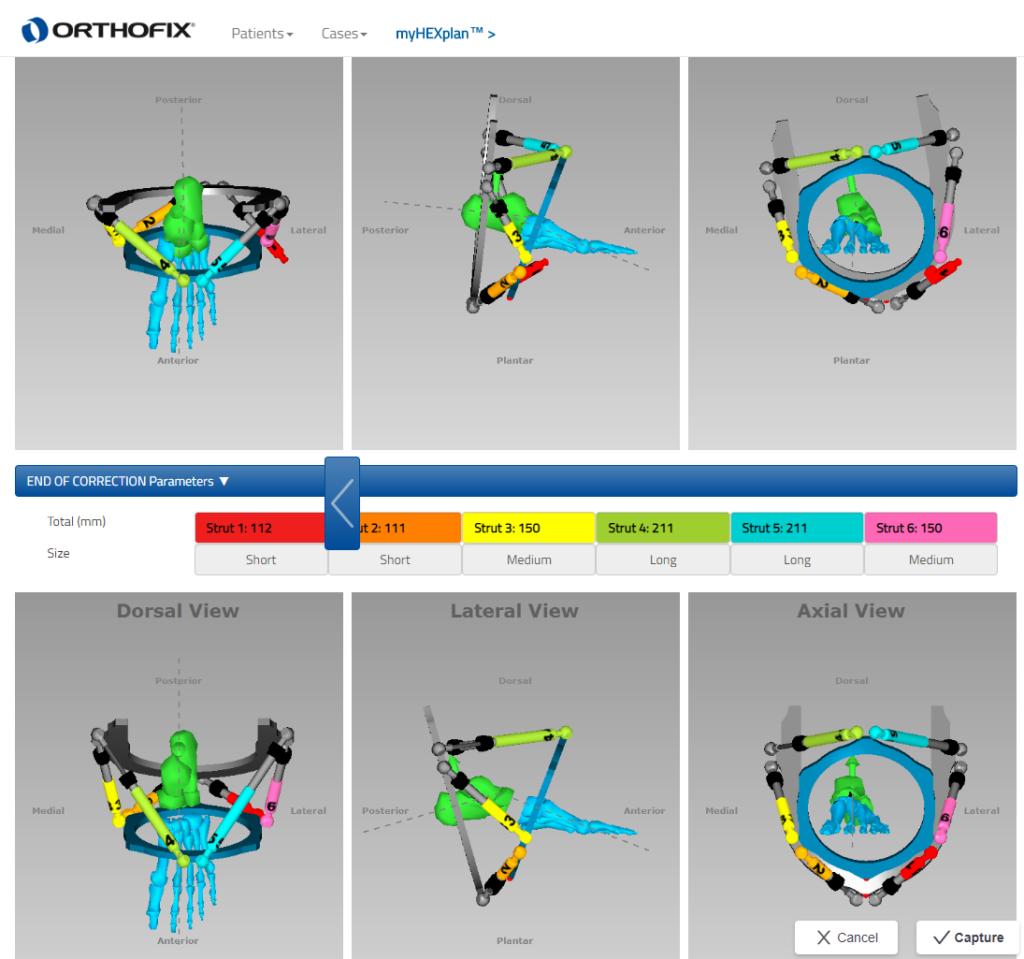
computer-assisted deformity correction. Some of the updates that we find with ankle Charcot are similar to foot Charcot in the sense that the combination of rodding and external fixation is vital for recovery. This comes from the same idea that since the bones are very weakened with Charcot just putting in a plate with some screws is destined for failure. Most cases of ankle Charcot require an intramedullary rodding to hold it in place with an external fixator on top of that. Once the healing is complete and the external fixator can take it off and then you have the rod left and there. Most people with ankle Charcot end up doing better with this technique. Up until the last few years when this technique became more excepted many people had failures of ankle reconstruction secondary to Charcot surgery because this was not to the excepted technique. Now that this is the excepted technique we have gone from a 50% success rate to over 90% success rate.
Lastly, there are many other tricks and techniques that we have found that works very well with making sure the skin heals properly. There have been some great advancements and negative pressure therapy on incisions to help the incisions heal faster. Utilizing all of these techniques we were able to help people with Charcot foot and ankle get back to the regular activities. And at least prevent many amputations that are unnecessary because of these new techniques.
-
Orpyx Orthotics Help Prevent Diabetic Foot Ulcers from Recurring
There are over 136 million people in North American that have diabetes or are pre-diabetic. If you are reading this, odds are you are one of them. When you have diabetes there are a lot of things going on that you must watch for. Many people with diabetes, about 70%, have a condition called neuropathy, which means you can’t feel your feet. When you can’t feel pain in your feet it means you can’t feel when there is an issue, like a rock in your shoe, laces tied too tight or too much pressure being placed on the bottoms of your feet. These situations can quickly develop into wounds, which if not managed appropriately can last for years and in the worse cases end up with an amputation. Orpyx orthotics can help prevent diabetic foot ulcers from recurring.
Somewhere in the world, a leg is lost to diabetes every 30 seconds, but the good news is 85% of the time this can be prevented with proper care. FINALLY, a solution!
Recently a new technology from Orpyx® Medical Technologies caught my attention. It is a sensory custom orthotic system that monitors movement, pressure, and temperature on the bottom of your feet. It provides real-time alerts and offloading instructions when sustained, high-pressure levels occur. This is all done through a mobile app that is downloaded to a smartphone or through a display device provided by the company. You and your healthcare provider can use this information to help prevent these wounds from recurring and keep your feet healthy. In fact, a study was recently published with people that had diabetes, neuropathy, and at least one wound in the past twelve months. During the 18 months of the study, these patients saw an 86% reduction in the diabetic foot ulcer reopening using the Orpyx® SI technology.
The best treatment plan for diabetic foot ulcers is to prevent them from happening. Orpyx SI sensory insole ( custom-molded orthotics) system is one way to help keep your feet healthy. Check them out! Orpyx custom-molded orthotics can help prevent diabetic foot ulcers from recurring.

-
Predicting the severity of diabetic foot infections
When one presents with a diabetic foot infection there is always the fear of amputation. Diabetics that have infections in their feet are at significantly increased risk for amputation. The challenge is to make sure that the patient can be treated with his minimal amount of surgery as possible saving as much of the leg as possible.
Over the years research has been done in the field of predicting the severity of infection to see if there is a correlation with any markers in the blood or diagnostic studies that can tell us how bad the infection is. The studies can help us understand whether one needs surgery versus being able to treat with intravenous antibiotics. Usually, x-rays or an MRI or bone scan will tell us where the infection is to the extent of how far deep into the foot or up the leg the infection goes. There have been studies as to what markers in the blood he can tell us the severity of the infection. The first thing that we look at is one is white blood cell count as that is the primary marker to see if your body is fighting infection by producing white blood cells to fight the infection. There are other studies such as ESR and CRP that can tell us the severity of the infection.
Recently there has been published research into a marker in the blood called procalcitonin. Procalcitonin is the peptide precursor of the hormone calcitonin. It usually is elevated when there is an inflammatory stimulus from a bacterial infection. A recent study that was published in the Journal of diabetes research showed that increased procalcitonin levels at the time of admission to the hospital were a high indicator of amputation. This is a very important study for doctors and patients alike as when one presents with an infected diabetic foot amongst all the many tests that need to be performed procalcitonin levels are very useful in helping the doctor and the patient be able to predict the proper treatment.

foot wound This new data helps us create a better treatment plan with diabetics that have infections in the foot. Instead of waiting around for surgery or debridements, when this data is available more definitive treatment can be offered to the patient and prevent amputations. No one ever wants an amputation but given the choice of amputating a toe versus the whole leg, it seems obvious that one would rather lose the toe. With the information available from the procalcitonin test that can be the difference between losing the toe or leg.
-
Osteochondral Defect of the Talus
Ankle pain can really hold you back. If one takes three to five thousand steps a day that’s 3-5000 times that your ankle can hurt you daily. That is a painful way to live. There are many reasons for ankle pain. One that we specialize in here at the Advanced Foot And Ankle Center Of San Diego is Osteochondral Defect of the Talus.
As you can see from the video above this is a treatable condition. However one must realize that not many doctors are trained in and not many doctors have much experience in doing these procedures.
The first challenge is getting the diagnosis. Once one is evaluated in the office an x-ray is helpful in pointing us in the right direction. Many times the x-ray is insufficient, the next step is an MRI. The MRI is more specific for cartilage disorders. As can be seen below the dome of the talus has lost its natural contour and there is a defect of the cartilage of the ankle joint.

Osteochondral Defect of the Talus MRI Once a diagnosis is made, then based on the size and position of the defect as well as pain levels associated with the defect then one can make an informed decision with their surgeon as to the proper treatment. This article is only about surgery because the defect does not repair itself and does not self-heal. Either you have pain or you don’t.
The technique I would like to share with you is performing a medial malleolar osteotomy to access the talus and properly repair the defect. In my opinion, this is the only way to fully visualize the talus and repair the cartilage. Using arthroscopy or any small camera will not reach far back into the joint to visualize is well enough. And if you can not see what you are repairing then you can not repair it.
We use special cryopreserved cartilage that is called cartiform. This implant has been highly successful in my hands in repairing cartilage injuries of the foot and ankle.

Medial malleolar osteotomy for Osteochondral defect of the talus Above you can see in the picture the injured cartilage that is lifted off the bone.

Repaired Osteochondral defect of the talus with cartilage graft Above you will see the cartiform placed over the area of the talus that had the cartilage injury.
Ankle injuries can be very serious and should not be ignored. Come in today for your evaluation.
-
Charcot Foot Treatment
Charcot foot requires expert treatment from surgeons that have experience treating this condition. When one is diagnosed with Charcot foot they should seek out a doctor that can show them how many of these they treated successfully. One with Charcot foot or ankle is at a high risk for loss of limb due to many factors associated with the disease. We have developed techniques that allow for accurate and reproducible treatments to save a limb diagnosed with charcot foot.
When one is told as part of their Charcot foot treatment that they need to live in a boot (sometimes known as a CROW boot), this is helpful to prevent wounds. However this treatment does not correct the deformity associated with the disease. Unless one corrects the deformity one is always at risk to develop the ulcer and lose the leg.
There have been many advancements in treating charcot foot deformities. Dr Wrotslavsky lectures nationally and internationally regarding proper treatment and techniques . We are able to use computer models to analyze the deformity and slowly correct the deformity. This puts much less stress on the nerves and arteries and veins in the area. Through these and other methods we can put one in a much better position to prevent amputation in charcot foot.
If you have a foot wound and it is taking too long to heal , come in for another opinion today. Many of these wounds have other underlying issues that once addressed will get rid of the wound .

Charcot foot


