Category: Uncategorized

  • Salvage of the failed total ankle replacement

    Salvage of the failed total ankle replacement

    Salvage of the failed total ankle replacement

    So you had a total ankle replacement , Things were going well. But then you felt crunching in the joint and the ankle feels unstable. Or you had an infection after the surgery and the ankle just doesn’t feel right. I have had patients come into my office with ankle replacements from other STAR Ankle Implantsurgeons with the ankle replacement flipped upside down. No, your surgeon did not do anything wrong. Unfortunately ankle replacements can have complications. Infection and hardware loosening and displacement are not uncommon. The real issue is , is your surgeon equipped to do the salvage of the total ankle replacement  or the revisional surgery. There are many considerations that need to take place, is there infection , is there deformity, how much shortening will there be? Those and many other considerations and some very specific expertise and skills are necessary to salvage your ankle joint. I have has many patients come into my office and they were told by other surgeons as a second opinion to amputate the leg. That is too drastic. Now there are many techniques to replace the implant with certain bone cuts that can save the ankle. There have been studies showing fusion of the subtalar joint or a tibial osteotomy depending on the deformity or where there is laxity can make the difference in salvaging the failed ankle replacement.

    Even when the ankle replacement is beyond saving fusions are not the end of the world. There are many fusion techniques that can be done and maintain equal leg lengths. There is also the ability to fuse the ankle and then perform lengthening over a nail or distraction osteogenesis to maintain equal leg length. There are also some ways to revise the implant with a different type of implant.

    Dont settle for an ankle replacement failure by living with it , or getting your leg amputated. make sure you have a proper workup to either fuse the ankle or revise the implant. One last note its vital to make sure you don’t have an infection in the ankle because the replacement revision will need even more expertise.

    Anna a patient of mine wrote to me ” Dr Phil, thank you so much for taking care of my ankle, I am walking again without a walker . You changed my life”


  • Toe Fracture

    Toe fracture

    It’s three in the morning, and you need to go to the bathroom. You get up out of bed and didn’t bother turning in the lights. As you’re walking all groggy, “bam” a searing pain starts shooting through your toe. You stubbed your toe and Oh does that hurt, you think it’s nothing and the throbbing kicks in. You pop a Tylenol or motrin for the pain and after an hour you fall back asleep. Next morning you wake up and your toe is still sore. You’re about to put on your socks and notice it’s swollen and purple. Now you’re nervous ” did I break my toe” you ask yourself. You try putting on those nice shoes you were saving for today’s interview and the foot with the bum toe barely can fit into them. “Does that toe look crooked”  you wonder. You’re day ended up being a disaster, with the amount of pain you are in. You decide to make an appointment with a podiatrist to have it examined. You were lucky, that Dr. Wrotslavsky had an opening the next day at the Advanced Foot And Ankle Center Of San Diego. At your visit Dr. Philip Wrotslavsky examines the toe. Next you have an x ray and a toe fracture is confirmed as your diagnosis. This is a common occurrence. Many times the fracture is stable without deformity or dislocation. In those cases the simple solution is to tape the to the adjacent toe for a few weeks and it should heal fine. I do not suggest doing this without first having an x ray. I have a diabetics who thought they would do it themselves and ended up getting gangrene because they taped it to tight or they got an infection.

    Last week,  Kaitlyn came to my office and she had the same incident as described above but in her case the tie was very crooked and she could not even get into a shoe. An x ray confirmed a fracture of the toe, but in her case the bone shifted into the wrong position and had an angular deformity.

    fracture fifth toe
    fracture fifth toe

    I went on to numb up the toe with some lidocaine. Once that took I use a technique called closed reduction, and put the toe back in the proper position. Most toe fractures will take six to ten weeks to heal. The swelling can stay also for that amount of time. One must be careful regarding exercising with a broken toe, as that can cause it to deviate out of position. I have seen many a crooked toe and hammertoe’s from improperly treated toe fractures.

    So don’t leave your tie fracture to chance, make sure you see a board certified podiatrist to care for these injuries


  • Podiatry expert witness

    Podiatry expert witness

    Expert witness testimony for podiatry and foot and ankle legal cases are important whether you are the plaintiff or the defendant.  One of the big misconceptions is that expert review is limited to malpractice situations. I have courtroom experience and deposition experience in many more situations that call for a foot and ankle expert, not only malpractice. Personal injury and workmans comp cases many times require an expert witness for foot and ankle purposes , for which I have much experience. I have experience in elder abuse cases for skilled nursing facilities both plaintiff and defense.

    When choosing and expert witness make sure the doctor is board certified and fellowship trained. I have reviewed many cases and am constantly amazed by the lack of expertise the other side has brought to the table. Being board certified and fellowship trained in limb reconstruction I have the ability to recognize the source of injury and either able to connect it to the incident or refute the claim being made that such an incident caused the injury that is being claimed.

    Foot and ankle / Podiatry Expert Witness

    Reviewing the case and justifying or defending a claim as a podiatry expert witness is the first step to help you legally. However there are many other needs such as report writing. Writing a good report is important in being able to construct a good defense or complaint. Also cost reports are a specialty of mine, I have much experience in putting a numerical value to the cost of injury and cost of surgery and recovery.

    Depositions. Deposition experience is a key to the case. I have done countless depositions and that is where you will see the expertise that will justify your case. Whether it be a personal injury or Elder abuse or even malpractice case. Personal injury foot and ankle cases need an expert that can differentiate between bone , nerve , vascular , skin and tendon issues. Too many times too much focus is put on a broken bone when there is nerve damage as well.

    Courtroom appearance. Your expert should be eloquent and connect with the jury . Not too verbose and speak in a language the jury understands. Of course it does not need to mentioned , never speak down to the jury. One thing I have seen from other experts as an error is that they are so busy with their practice they come unprepared to the court case. An expert witness should no think they can wing it.

    So if you need defense or plaintiff expert advice for a podiatry Foot and ankle legal case, make sure to choose a board certified in foot and ankle surgery ( by the American Board of Foot And Ankle Surgery https://www.abfas.org/  ) and as well as being Fellowship trained. Lastly someone with deposition and courtroom experience and that has experience writing reports and cost reports.

    Philip Wrotslavsky is Board certified by the American Board of Foot And Ankle Surgery https://www.abfas.org/ , he is orthopedic fellowship trained in limb lengthening and limg reconstruction. and has experience in courtroom experience and depositions and cost report writing. To request a case review he can be emailed at drphilipw@sdfootdoc.com  888-451-3770


  • Sesamoid fracture

    Sesamoid fracture dancer testimonial

    Jill, who is a professional dancer came into my office 2 months ago and was in severe pain. The ball of her foot was killing her , particularly by the big toe. She was performing leaps and landed hard on her ball of her foot and felt an enormous amount of pain. She was first seen by another doctor , and was recommended a surgery to remove the sesamoid. That sounded fishy to her and wanted to try a non surgical approach.

    She was seen at our office, an examination was performed. After performing a gait analysis along with digital x rays, her diagnosis was clear, she had a fracture of one of her sesamoids. The Sesamoids are two pea shaped bones that are under the big toe by the ball of the foot. There is a tendon that is attached to them called the flexor hallucis brevis. Injury of the sesamoid bones can happen from direct impact, such as coming down hard on them. That is common in dancers and runners. Or sesamoid fractures can stem from repetitive microtrauma that results in either an inflammation called sesamoiditis or a fracture that is not felt.

    Back to our story with Jill, her sesamoid fracture was a direct injury that she felt during a dance routine. There are many treatments for this painful injury, however removing the sesamoid bone should be saved as a last resort. I am not saying it’s the wrong thing to do, but there are other treatments that can be tried first.

    Sometimes the sesamoid fracture on x ray is really am old fracture, or even there are times when you’re born with a split sesamoid otherwise known as a bipartite sesamoid. In this case it may be a sesamoiditis and not a fracture. Many times a steroid injection with a good pair of custom molded orthotics will do the trick and resolve the pain. Sometimes a few and in a fracture boot is necessary. If its a fracture surgery is very rarely necessary, unless there is a dislocation such as a severe turf toe injury. When there is a sesamoid fracture immobilization and staying off the foot is important to allow our to heal. We use the freedom leg device to help people get around while staying off the foot. Sometimes a bone stimulator will help heal the fracture, because sesamoid are hard to heal due to poor blood supply. I have had good results with PRP injections and amniotic fluid injections, those help bring the cells to heal up the area. Sometimes the bones don’t heal, that’s not the end of the world. If its not painful, then monitoring it and special shoe inserts/ custom molded orthotics are good for this. If it doesn’t heal and you have tried multiple treatments and you are still in pain then surgery can be a good solution for you. I remove the offending bone and 95%of the time problem is resolved.


  • Surfing Foot Injury

    Surfing Foot Injury

    Surfing Foot Injury

    Living near the ocean can be a lot of fun, particularly  with all the water sports one can participate in. In my podiatry practice we see many foot injuries, one that you may not think to be very common are foot injuries from surfing. I have had many surfers come in with all types of foot injuries some more common than others. How are they diagnosed what can be done to treat them and finally what can be done to prevent a surfing foot injury.

    Ankle sprains and sesamoid injuries are the top two injuries that i see as a surfing foot injury. After that I will see tendonitis of the big toe tendon (extensor hallucis longus and brevis and flexor hallucis longus and brevis) and other tendonitis of the foot. Then there are capsular tears and capsulitis particularly of the ball of the foot , which can lead to pre dislocation syndrome of the second metatarsal phalangeal joint.

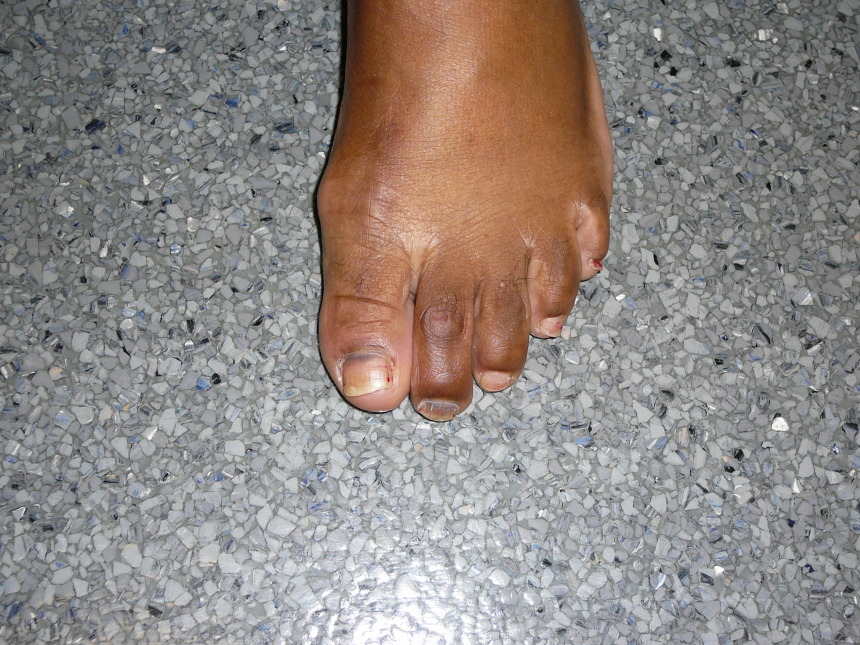
    Certain foot types and foot shapes can predispose you to getting surfing foot injury. Such as in the picture below a high arch foot will tend to roll cavus pre op2out and come down in awkward positions and leading to injuries. These types of feet also put allot of pressure on the ball of the foot causing injuries to the ball of the foot.



    Fractures can happen as well when not careful , below is a ankle fracture that required screws and a plate to e fixed from a surfing injury.

    Ankle fracture dislocation
    Ankle fracture dislocation


    If you injure your foot or ankle while surfing do not take it lightly. It can have significant detrimental effects to your future sporting activities.

    Prevention can be summed up as , know your skill level . Do not try things you have not done before without proper instruction . Stretching can be very helpful. Taking breaks especially if you have hurt yourself can help.

    Most of all if you sustain a foot or ankle injury while surfing, make an appointment with your local foot and ankle expert podiatrist , that has seen many of these injuries. There are allot of therapies that can be done, Don’t wait until it is too late and then your likely hood of needing surgery will increase

  • Diabetic Charcot foot

    The diabetic Charcot foot is a very debilitating disease process for patients. However there are very exciting medical breakthroughs in the treatment of the disease.

    Diabetic Charcot foot is a highly missed diagnosis, It usually presents as a red hot swollen foot that is often confused with being a cellulitis or an abscess foot infection. I have seen too many unfortunate cases where the patient was told they had a diabetic foot infection when it was really a diabetic charcot foot. Educating other surgeons and doctors is a key issue in preventing unnecessary surgeries and unnecessary amputations of the foot and leg. The more doctors and patients alike that look out for this process, then the better off the public is. Dont let a red hot swollen foot fool you. If you are a diabetic, or if you have had a kidney or pancreas transplant then you are at an increased risk for Diabetic Charcot foot, otherwise known as Charcot neuroarthropathy.  There have been some recent studies showing the people that have have kidney and or pancreas transplants have an increased risk to get charcot foot.

    The number one priority , once you have confirmed it is a diabetic charcot foot is to stabilize the foot and prevent continuation of deformity. A deformed foot will lead to ulcers and that leads to infection which will then bring one to an amputation of a toe foot or even leg.

    Here at the Advanced Foot And Ankle Center of San Diego we have developed cutting edge methods of stabilizing the diabetic charcot foot and preventing severe deformity. This may require one or two surgeries. But that is not a lot if you have your foot on your leg in the end. So make sure to keep you sugar levels and HBA1c levels under control, because those are strong indicators of one that may end up with a Diabetic Charcot foot. and dont forget to make an appointment with me if you or a loved one is affected with this disorder , we can save the foot.

  • Runners toenails

    Runners toenails

    Runners toenails

    Running can be great exercise, one of the drawbacks of running is the multitude of foot injuries that can be associated with it. There are ankle sprains, plantar fasciitis, stress fractures of the foot and runners toenails, besides many other injuries. What is runners toenails , how do you get runners toenails and what can you do once you get it.

    Runners toenails can present as a black toenail which can come from a subungual hematoma. It occurs when there is microtrauma at the nail bed. Thus causing bleeding under the nail otherwise known as a subungual hematoma. Not all black nails  are hematomas, some can be deadly cancers such as a melanoma, you should never disregard a black nail because it can be a form of skin cancer. Now back to runners nails.

    Once the nail starts to lift off and the bleeding begins , this will happen while running and usually you will not feel it happen. You will notice it after running long distances. Many times the nail will fall off. Many times the nail becomes very thickened and painful in shoes. One can also get ingrown toe nailsP1070431

    infected ingrown toenail
    infected ingrown toenail

    from this. I had a patient that had 3 different layers of toenails growing on each other , while he took off his sock the nail got caught and it was quite a painful situation.

    Repetitive nail damage will also allow for fungus to start creeping in and growing under your nail. That can be very unsightly.

    Bottom line is Runners nails and black nails from running comes from bleeding under the nail. it can get infected you must see your foot and ankle specialist if the toe is red hot and swollen it could be serious. Wearing proper fitting shoes is very important to prevent this from happening.

    There are even some studies that show with certain types of feet and specific foot biomechanics runners nails can be prevented with custom molded orthoticssubungual hematoma subungual hematoma subungual hematoma

    So dont ignore your black toenail it could be more serious than a runners nail ( subungual melanoma)

    Make sure to see your doctor if the nail is ingrown or infected. And finally come by for a visit to see the specialized medicine that we have to make your nails look healthy again.

  • Achilles rupture repair

    Achilles rupture repair

    So you are running, and you feel like someone kicked you in the back of the ankle. You turn around and no one is there. Then you feel the pain in Achilles tendon ruptureyour ankle and the back of your ankle , and boy does it swell up right away. You go home that night  and try icing

    Achilles tendon rupture
    Achilles tendon rupture

    it thinking it is a ligament sprain or  tear the pain and swelling is getting worse and now you see your back of the ankle is turning purple and balckish.

    You make an appointment with your doctor and they refer you to a foot and ankle specialist. You go not knowing what to expect and you are told you tore or ruptured your achilles tendon. You are devastated.


    Achilles rupture repair

    This is what happened to Rick W. a patient of mine. He was at work lifting an object and felt that pop in the back of his leg. He was very worried because he could not afford to lose a lot of work time to the recovery process.

    He is very lucky that he found the Advanced Foot and Ankle Center of San Diego. Here we have a Board certified in foot and ankle surgery expert that has the ability to perform the repair of this most important tendon using techniques that allow you to get back to work in no time.  using a special approach that leaves minimal to no scarring we can reattach the tendon and start you on physical therapy  very soon. See the pictures below

    Dr Wrotslavsky repairing the achilles tendon
    Dr Wrotslavsky repairing the achilles tendon
    Dr Wrotslavsky repairing the achilles tendon
    Dr Wrotslavsky repairing the achilles tendon
    Dr Wrotslavsky repairing the achilles tendon
    Dr Wrotslavsky repairing the achilles tendon
    Dr Wrotslavsky repairing the achilles tendon
    Dr Wrotslavsky repairing the achilles tendon
    Dr Wrotslavsky repairing the achilles tendon
    Dr Wrotslavsky repairing the achilles tendon
    Achilles tendon repair immediate post op incision
    Achilles tendon repair immediate post op incision
    9 months post achilles repair incision Dr Wrotslavsky
    9 months post achilles repair incision Dr Wrotslavsky

    Achilles rupture repair

    Rick went on to a successful pain free recovery. He is already back playing weekend basketball. And spent a few days at disney with the family walking around pain free.

    If you ruptured your achilles make sure you don’t end up with a big nasty scar and a bad limp. Get it fixed by an expert.

  • In-toe walking

    In-toe walking

    intoeing
    intoeing

    In-toe walking in children.

    So your child is walking with their foot pigeon toe or in-toe walking. They may be tripping over their own feet. You may think they are just a little klutzy. however it may be something more significant. In-toe gait or Intoe walking can stem from a few different areas. You need an expert in pediatric and childrens gait to analyze this issue to treat properly. When i performed my fellowship at the International Center For limb Lengthening under the guidance of Dr Dror Paley and Dr John Herzenberg, I had the opportunity to evaluate hundreds of children and adults with torsional issues that led to intoe and pigeon toe gait. it is vital to perform a thorough gait (walking exam) . I use a special video program for gait analysis that allows for instant review with slow motion viewing. There are times that an x ray can be helpful to measure angles of torsion. However the most important part of the exam is the physical exam and performing range of motion exams.

    The issue that needs to be decided is whether the torsional deformity causing the in toeing is a bone deformity or a soft tissue / muscular tendon tightness. Then the next part is to decide if the problem is stemming from the Hip or the femur or the tibia or the foot. Or maybe a combination of more than one . There are multiple reasons for intoe walking in future posts i will discuss some of the diagnosis and treatments. Such as Femoral torsion and Femoral Anteversion. There is also Tibial torsion and internal tibial torsion. As well as metatarsus adductus , and even improperly casted clubfeet can leave some with intoe gait. I have seen many Ponseti casted clubfeet with residual metatarsal adductus.

    We will get into each topic over the next few weeks.


    metadductus blecks test

    neglected metatarsus adductus
    neglected metatarsus adductus
    intoeing
    intoeing


  • Hallux rigidus success story

    Hallux rigidus success story

    Hallux rigidus success story

    Sarah is a patient of mine from San Diego. She was an avid runner and loved to play golf. Sarah is 56 years old and started over the last few years developing severe pain in her big toe of her right foot. It got to the point where she could not go out for a run anymore. Due to the fact it was so painful every time she pushed on he big toe. What made her even more upset was her golf game was totally off. Her timing on her swing was affected negatively. She could not even finish nine holes. She came to me after seeing a few doctors and was frustrated with her previous treatments. She tried orthotics and injections with no relief of her pain.

    Hallux rigidus success story

    When she first came to my office she did not have an x ray. Using our digital x ray machine that enables us to take exact measurements of bones and joints we were able to see the problem on the x ray.

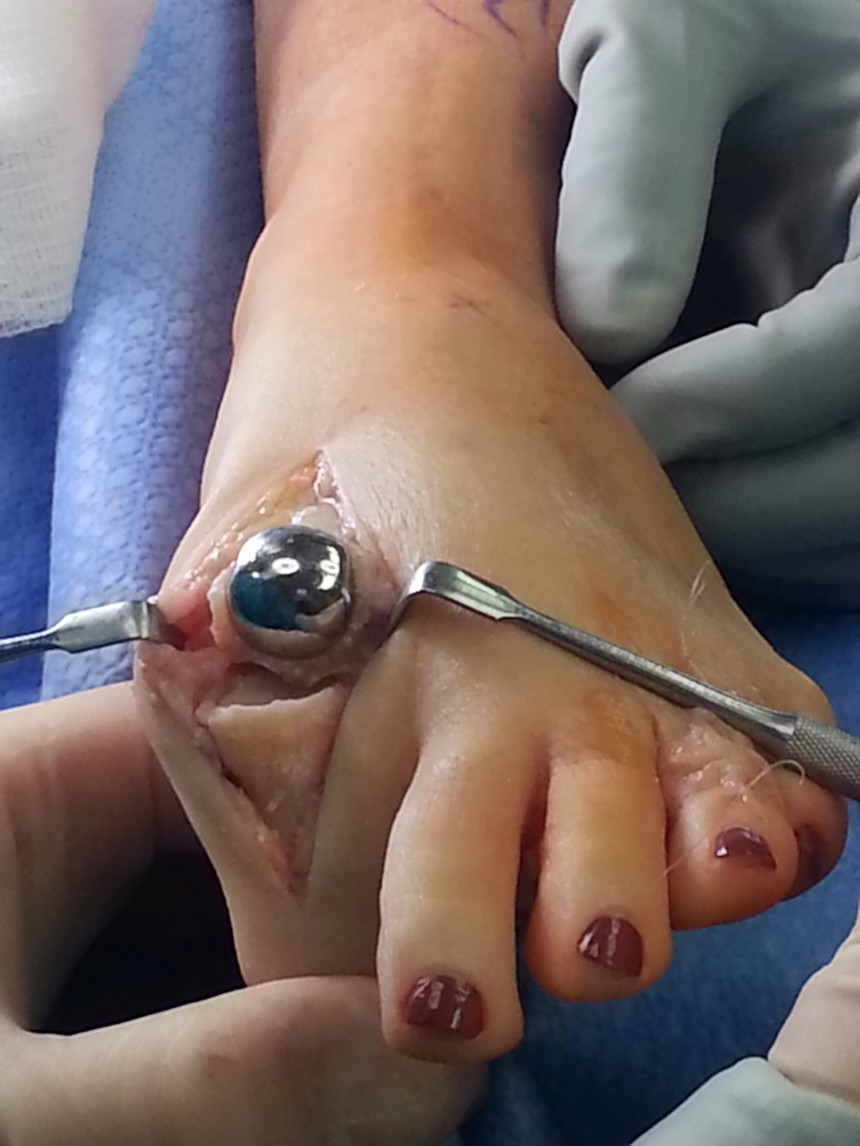
    as you can see from the pictures above severe joint space destruction of the big toe was her issue. There are some fancy medical terms for it. Hallux Rigidus and hallux limitus are the two most common terms. There are many treatments available for this. Due to her advanced condition she elected to have a joint resurfacing procedure. We don’t like to perform fusions due to the loss of all motion with fusions. Here we have a saying “motion is Life”. The joint resurfacing is like a joint replacement of the big toe. The difference is that less bone is removed. I have over 8 years of follow up with my patients of joint resurfacings and there is consistent satisfaction and pain free range of motion of the big toe joint.

    Hallux rigidus success story

    Hallux Limitus and hallux rigidus can be painful to live with. Sarah underwent the successful surgery on her foot to resurface the joint using an arthrosurface toe implant.  Congratulations on your new toe.